South
Atlantic
A small story with a fairly large mast in it.
There came a time, in the autumn of 1986, when my father walked into the Naval Chart Depot in Gibraltar to buy a single piece of paper that — had he known what was coming — he might have bought twice. The piece of paper was Admiralty Chart 1769, Islands and Anchorages in the South Atlantic. He added it to his pile on a whim. He had no intention of visiting any of those islands. That, as it turned out, was the first of several things he was wrong about that year.
I should explain about my family, for the events that follow make less sense without context. The yacht was called Chricanto — Chris, Candice, Antony, the names of the three children mashed together in a manner my parents found cleverer than it was. She was twenty-seven tonnes of ferrocement, fifteen metres long, and my father had built her in our front garden in Durban. When the time came to remove her from the garden we knocked over a gate pillar, because we had built her a little too big. There is a metaphor in this for anyone who cares to look for one.
The crew consisted of: my father (former Royal Fleet Auxiliary, a man whose preferred method of solving problems was to study them at length and then quietly do the right thing); my mother Margaret (whose particular gift, as you will see, was the absolute refusal to lose her composure under circumstances where any reasonable person would); myself, then thirteen; my sister Candice, nine; my brother Antony, seven; and our cat Pusskins, who had not been consulted on any of this.
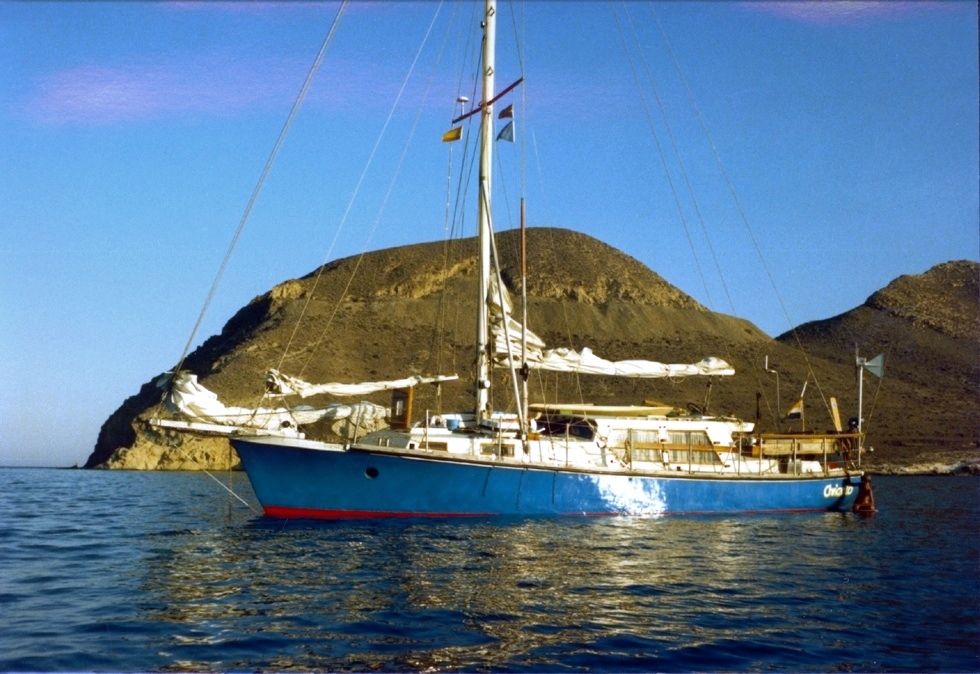
002 At anchor on the Mediterranean coast.
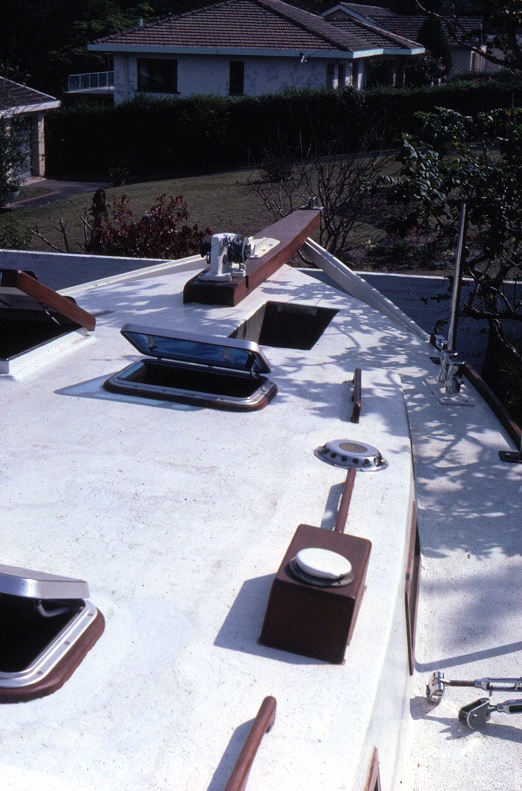
003 Under construction in the front garden, Durban.
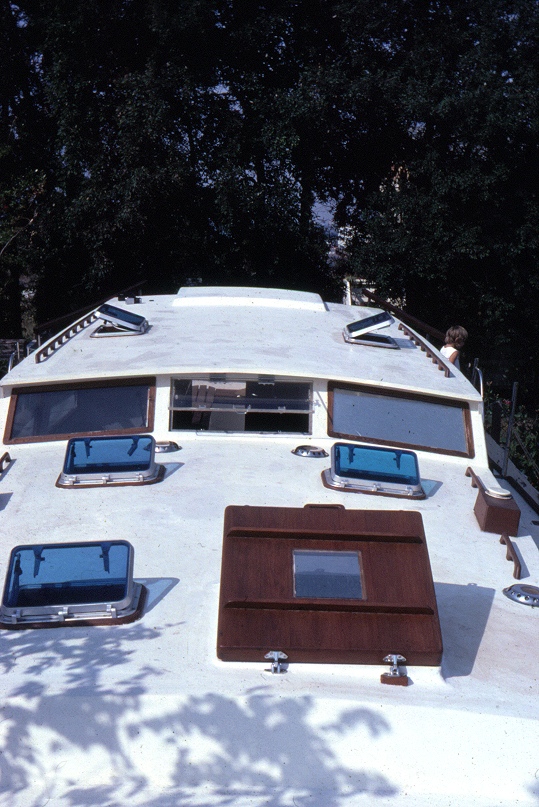
004 Cabin top, still being built.
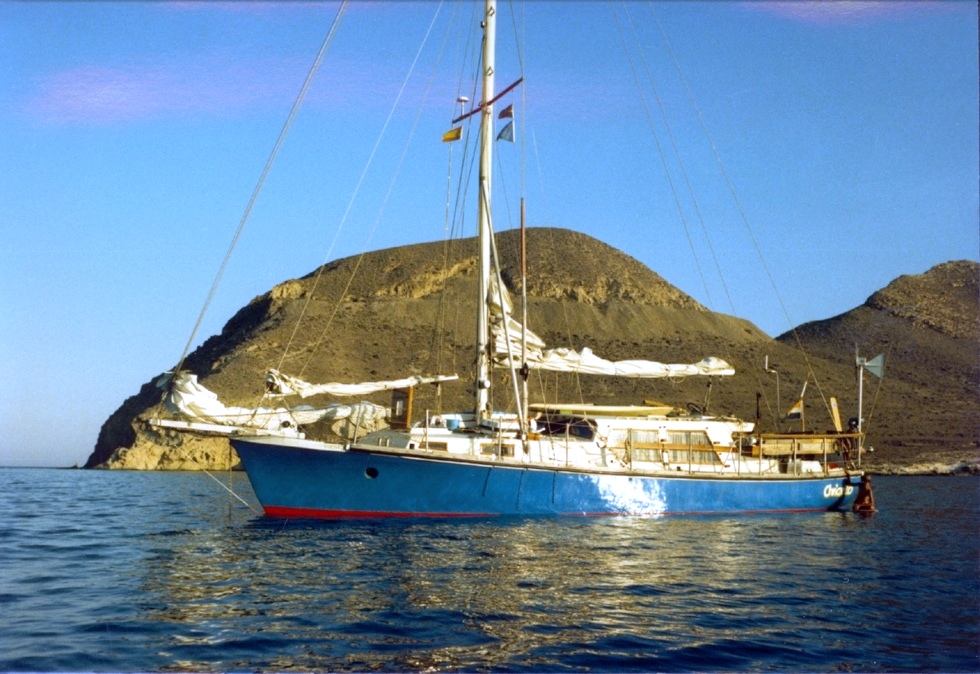
005 Heading back to Vilamoura from Faro.
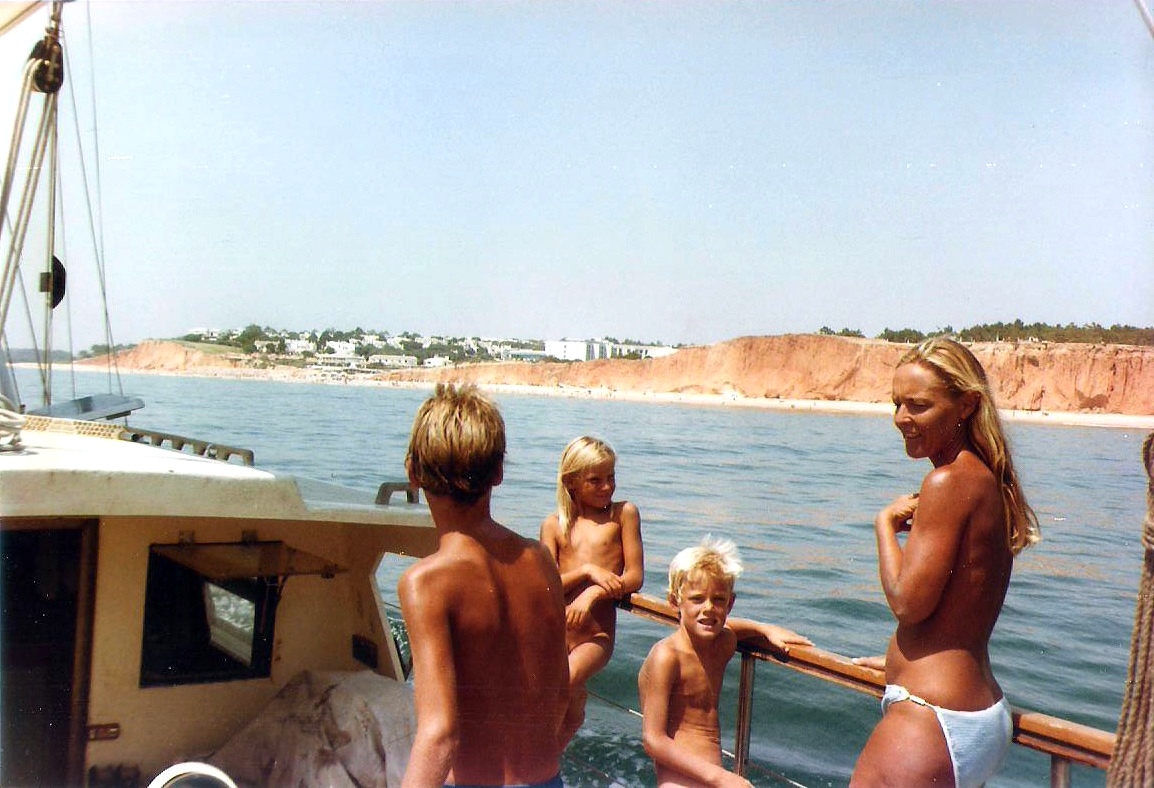
006 Trying a bit of surfing off Ilha Culatra.
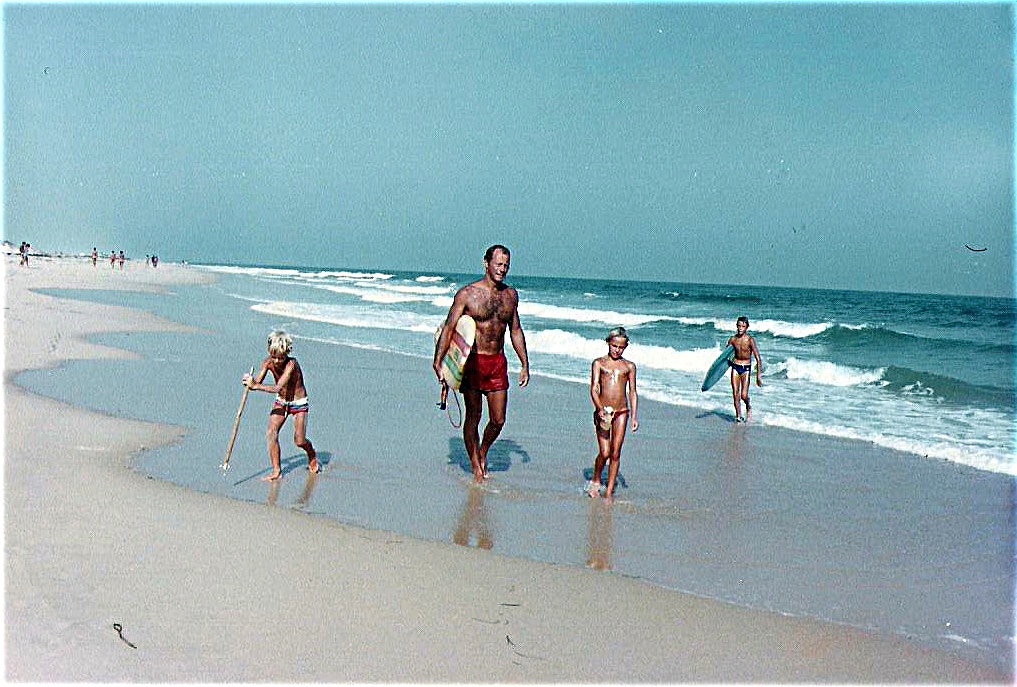
007 The upper Rio Guadiana.
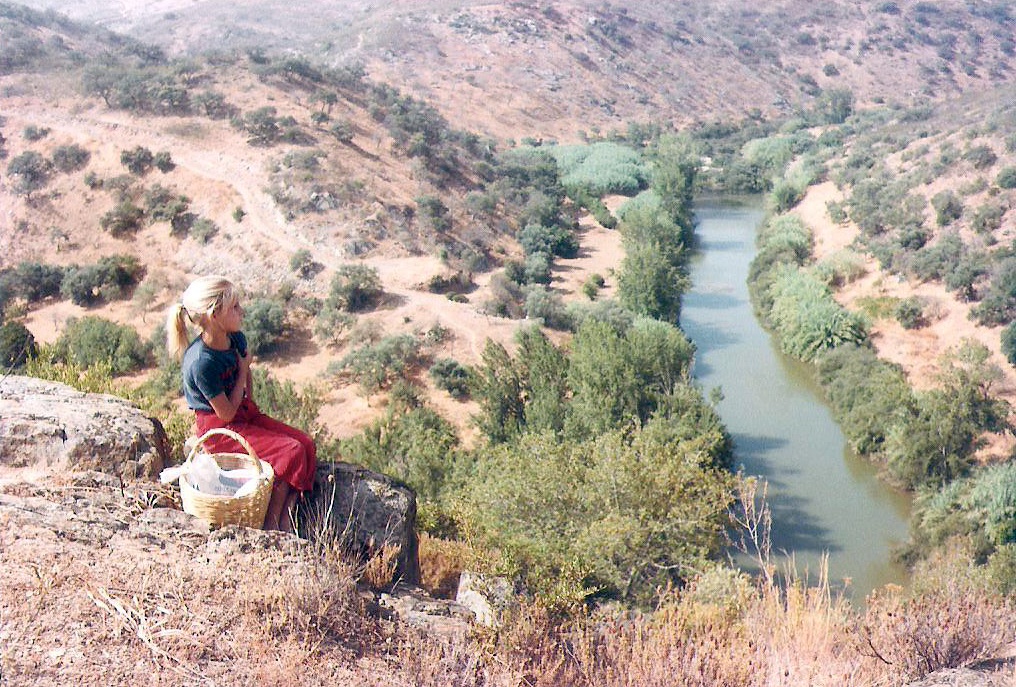
008 Above the Guadiana with a basket.
008b Approaching Málaga — we stopped for Italian visas we never used.
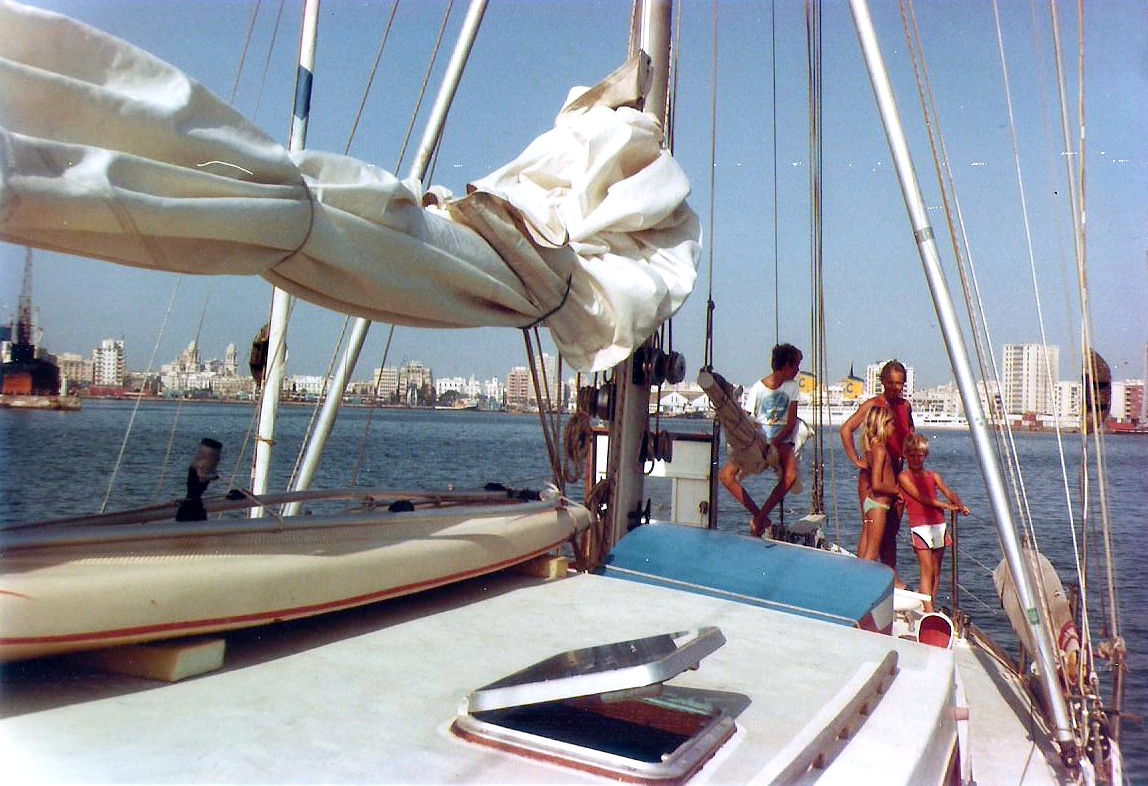
009 Marina Bay, Gibraltar.
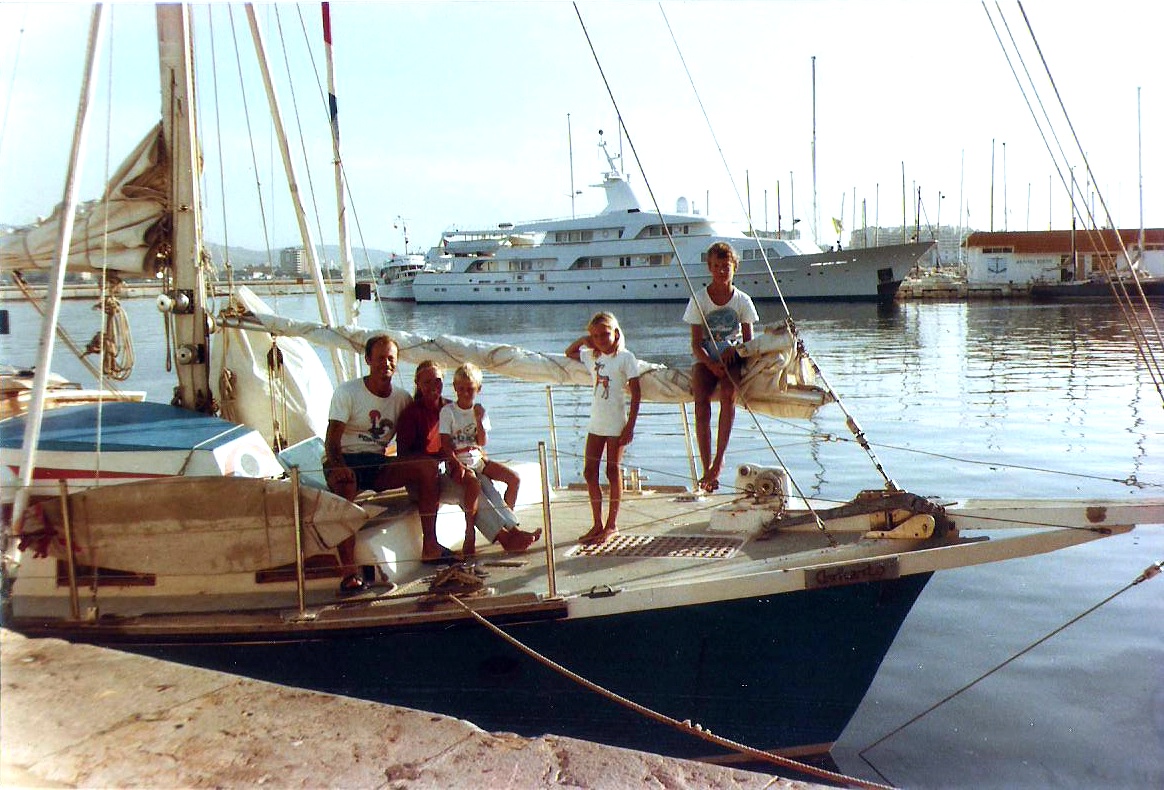
010 In good company — with the Saudi royal yacht El Pharaon behind.
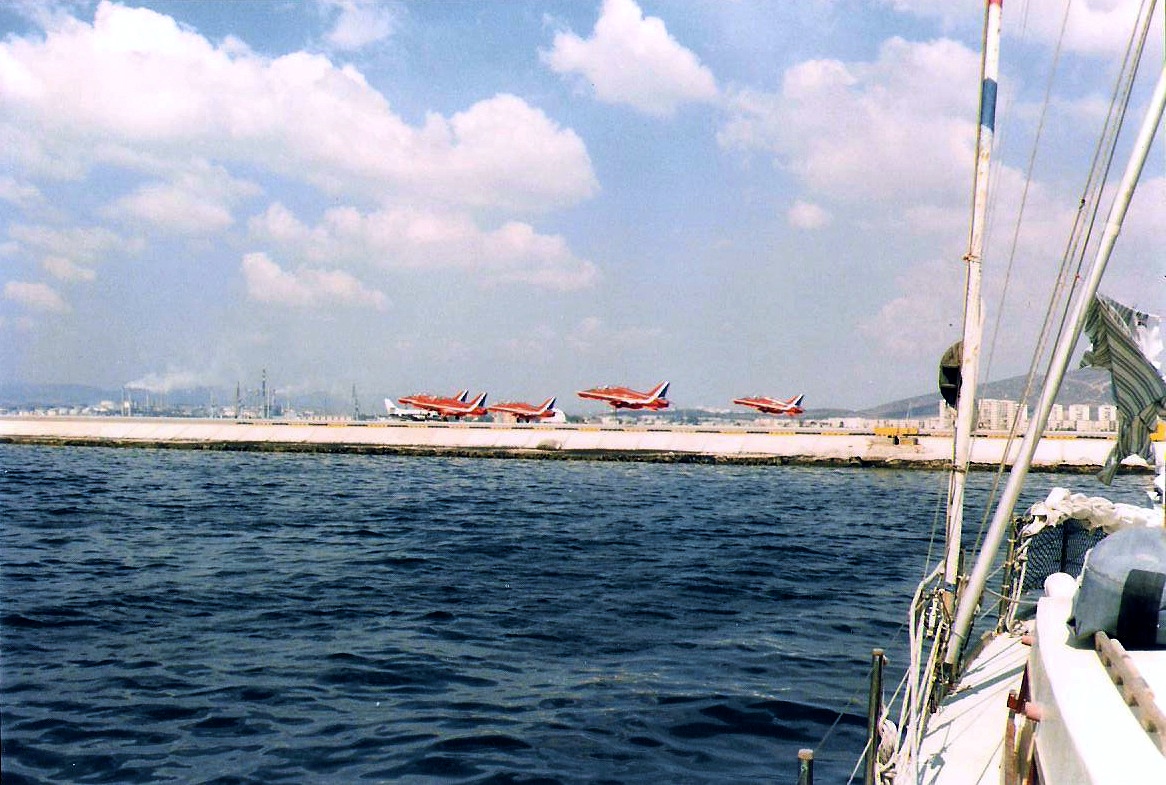
011 Gibraltar — the Red Arrows over the runway next to Marina Bay.
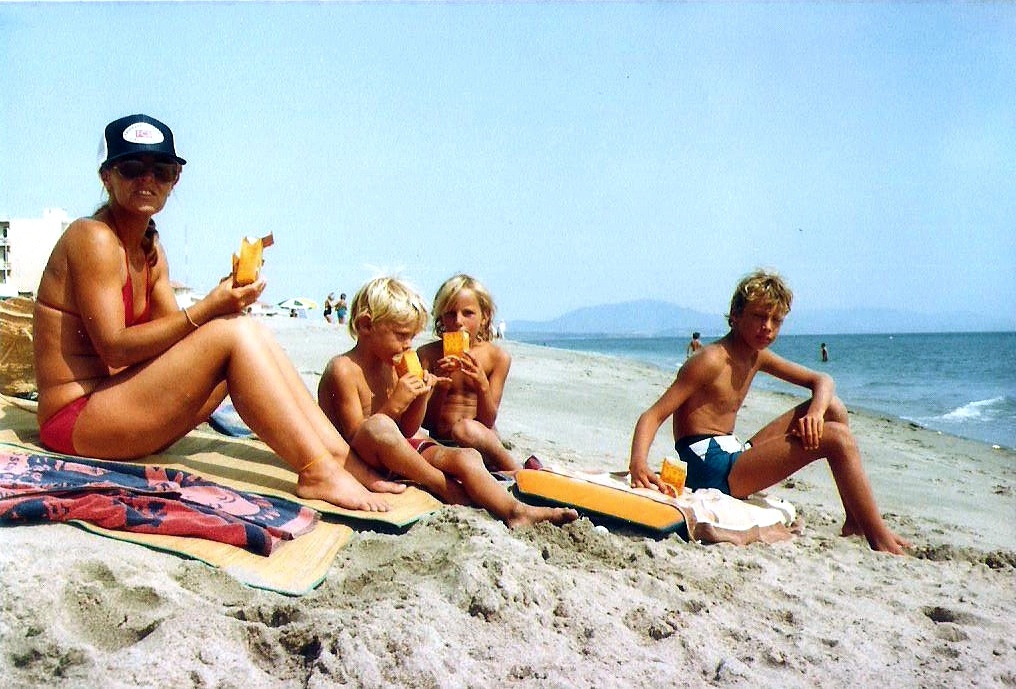
012 Eastern Beach, Gibraltar — with frozen orange-juice cartons.
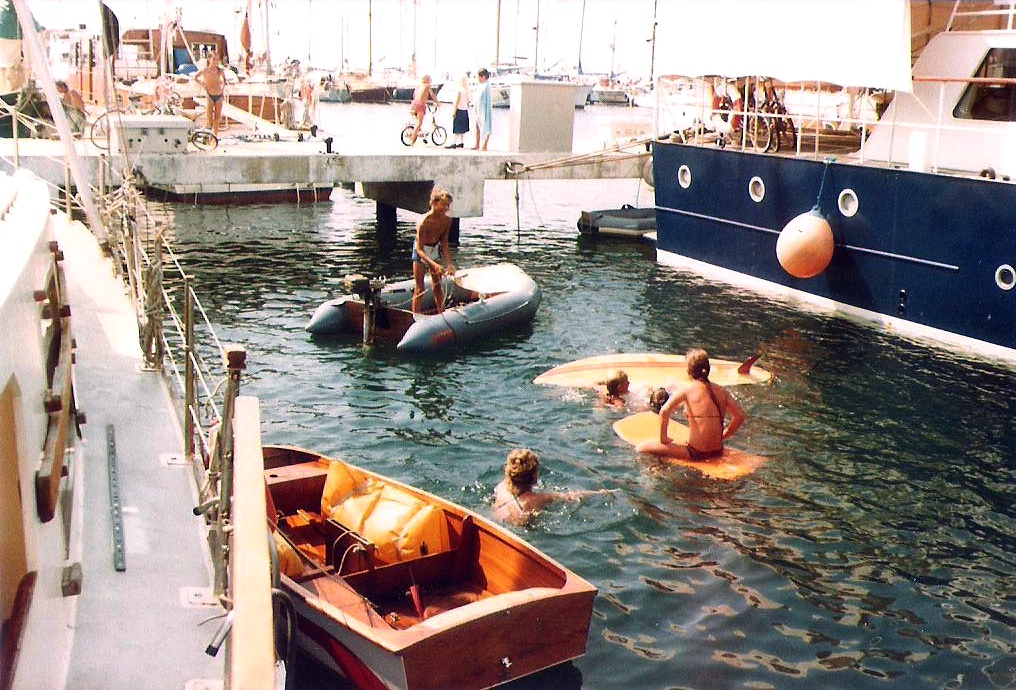
013 With the marina children, Gibraltar.
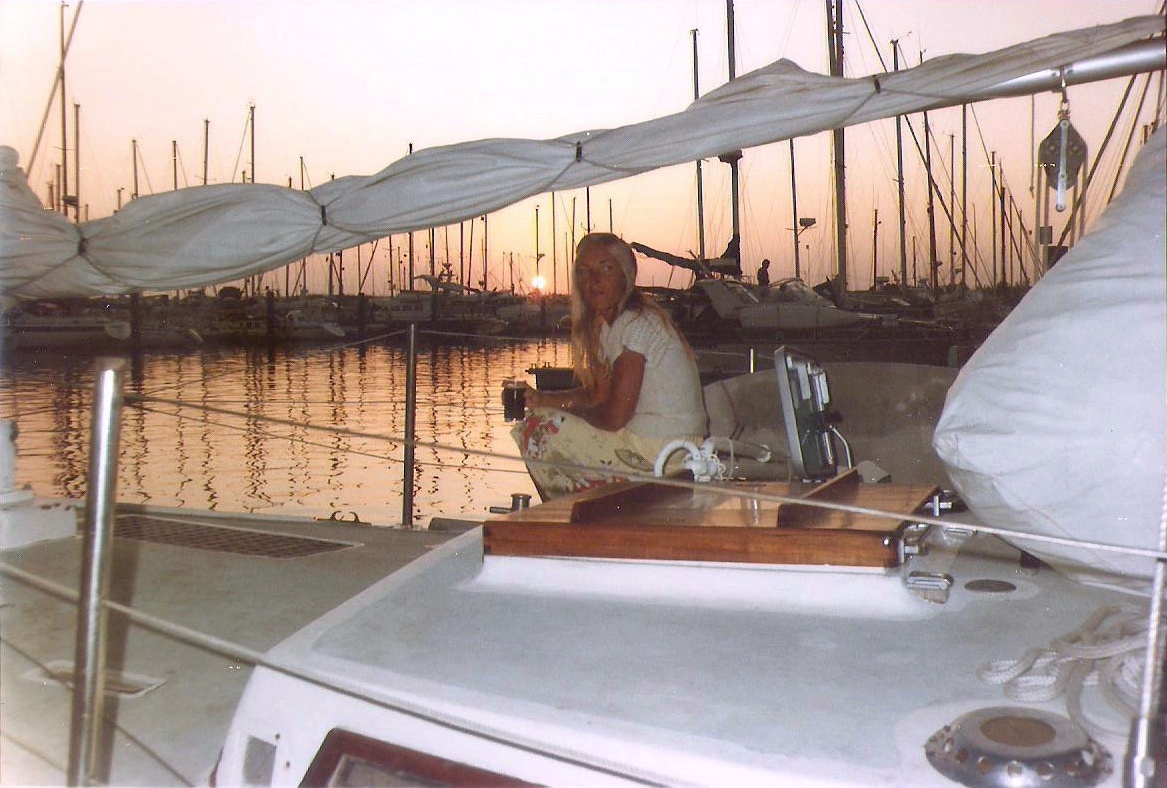
014 My mother, evening, Marina Vilamoura.
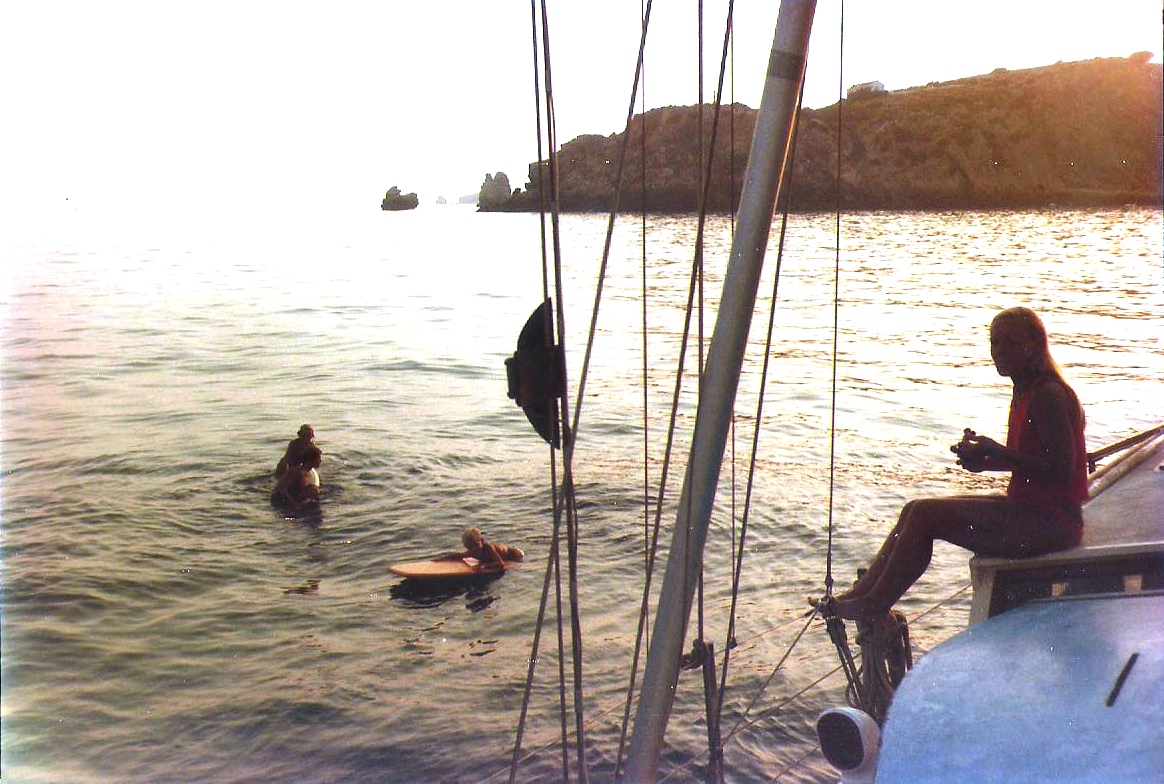
015 An evening dip at anchor.
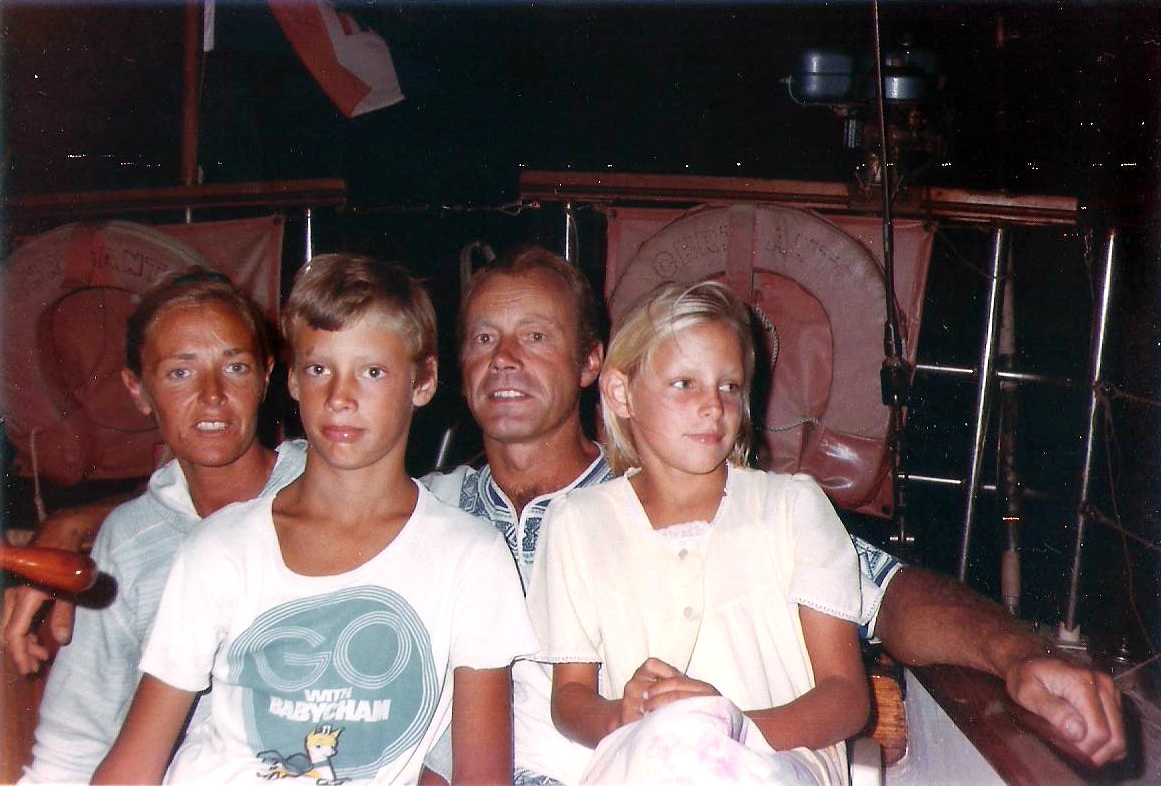
016 Margaret, me, my father, Candice — in the cockpit.
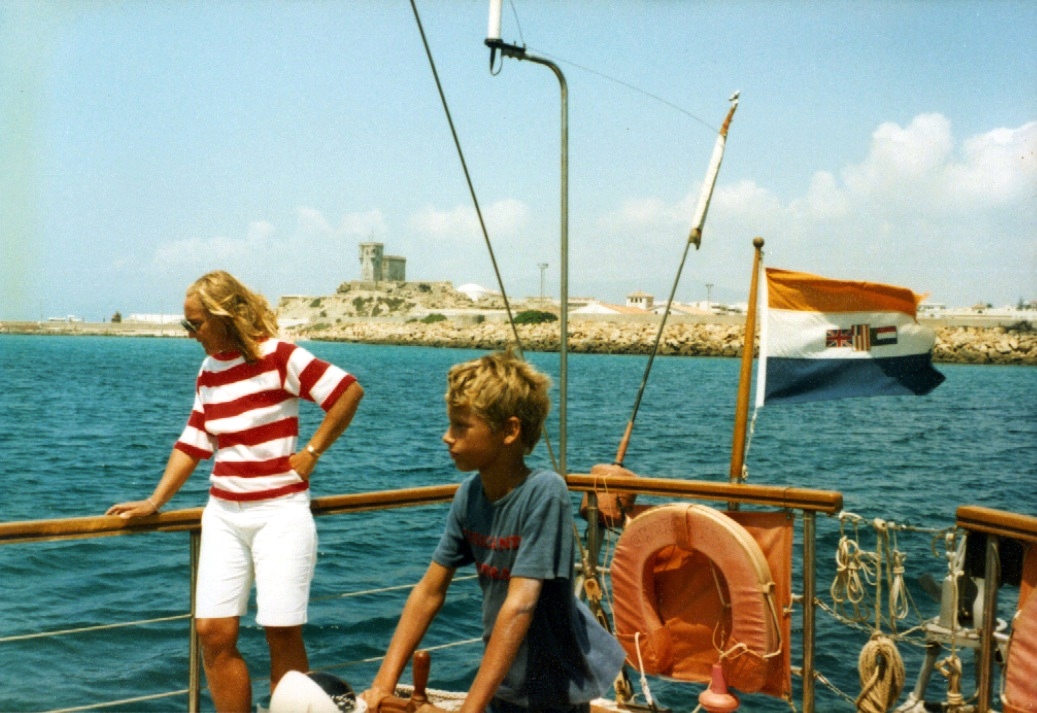
017 At the helm, southern Spanish coast.
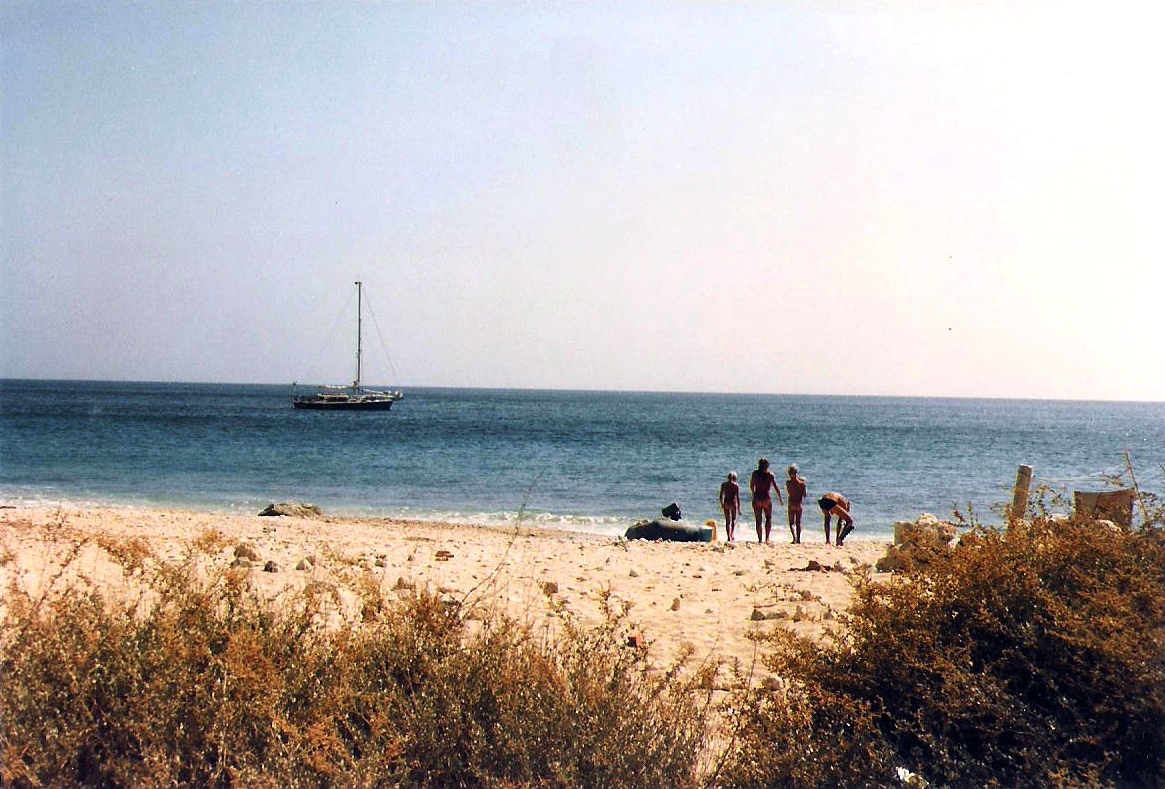
018 Peacefully at anchor, Mordeira Bay, Ilha do Sal.
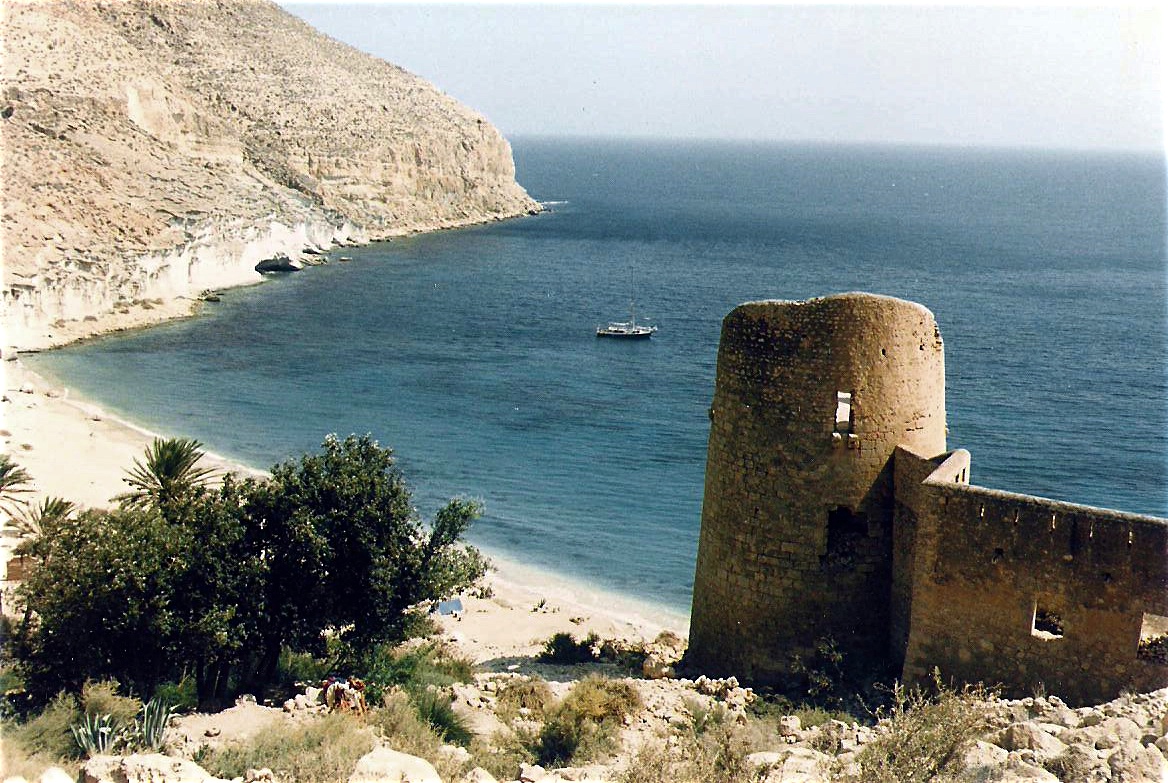
019 Anchored off Castillo de San Pedro, southern Spain.
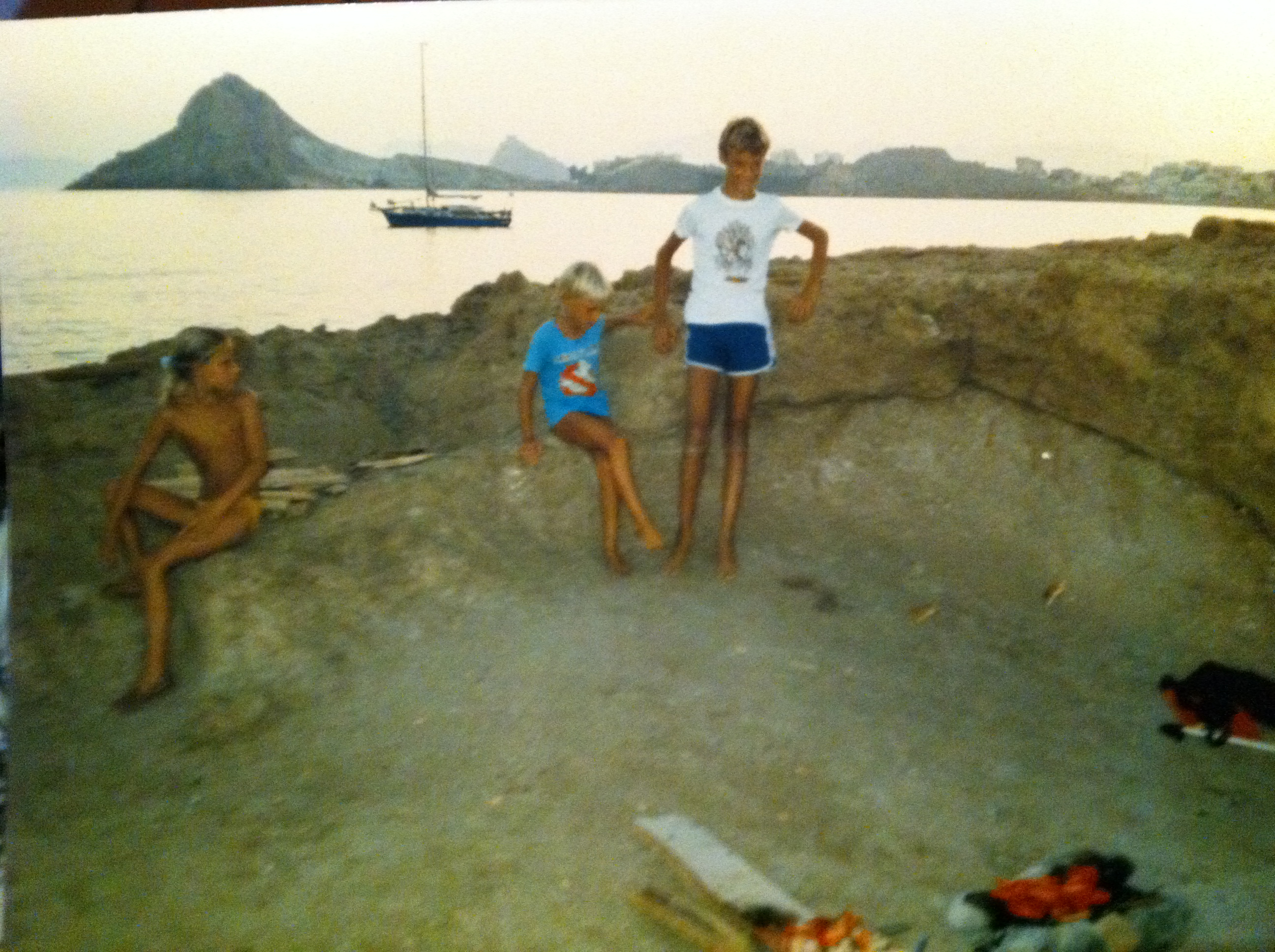
020 Spanish coast at dusk. Candice, Antony, me.
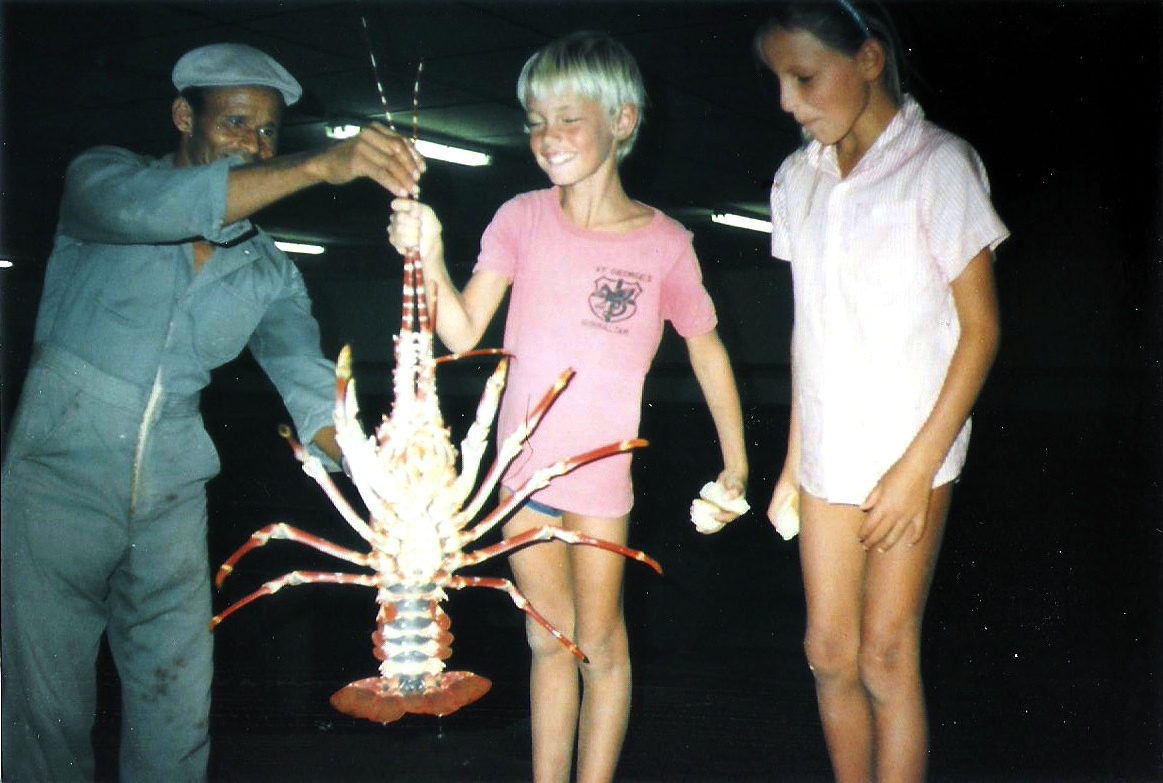
021 Antony with a three-and-a-half-kilogram crayfish.
On the twentieth of October, with the Rutland windcharger installed and the Autohelm 5000 wired in and my father satisfied that we had accounted for every reasonable misfortune the Atlantic might offer, we sailed into a bank of thick fog. The fog cleared. The Levanter — that easterly wind that funnels through the gap between Europe and Africa, sometimes a polite nudge, sometimes a gale, that day a downwind gift — blew us clear of the Straits before lunch. We settled into the slow rhythm of long-ocean sailing.
A day out of the Straits my father asked me whether I would care to stand my first solo watch. I would. He briefed me on what to do and what not to do, observed that the sea was empty and the wind steady, and went below to sleep in my parents' bunk. This is the kind of trust that one's father, having decided to extend it, does not subsequently undermine by hovering. He went to sleep. He stayed asleep.
I was some way into the pitch dark when I began to hear clicks coming through the hull from below. They had the cadence of dolphins, but a slightly artificial quality that dolphins do not possess. I scanned the horizon. There was a dark mass off to starboard. There was, very shortly, another off to port. They were warships running blacked-out. A helicopter approached low from dead ahead, passed directly over us, banked, and returned the way it had come. We had sailed into the middle of a naval exercise. My father came up. We watched the dark masses pass us in silence and disappear east.
We made Porto Santo a week later and discovered, with the casual coincidence that the sea specialises in, that the boat anchored next to us belonged to Patrick Green of Cornwall, whom we had last seen four years previously. A few days later in Funchal we found ourselves anchored ahead of Flagon, owned by Ed Davies of Durban. In an immensely vast world, sometimes it shrinks.
All of us — the family and Patrick — hiked to the Pousada at Pico Ruivo, the highest peak on Madeira. Antony, possessed of the mysterious internal furnace that all seven-year-olds have, was deployed as a hot water bottle, placed in each of our beds in turn until the sheets warmed. He approved. The next morning we walked down the mountain in plastic bin liners. They were not, strictly speaking, waterproof.
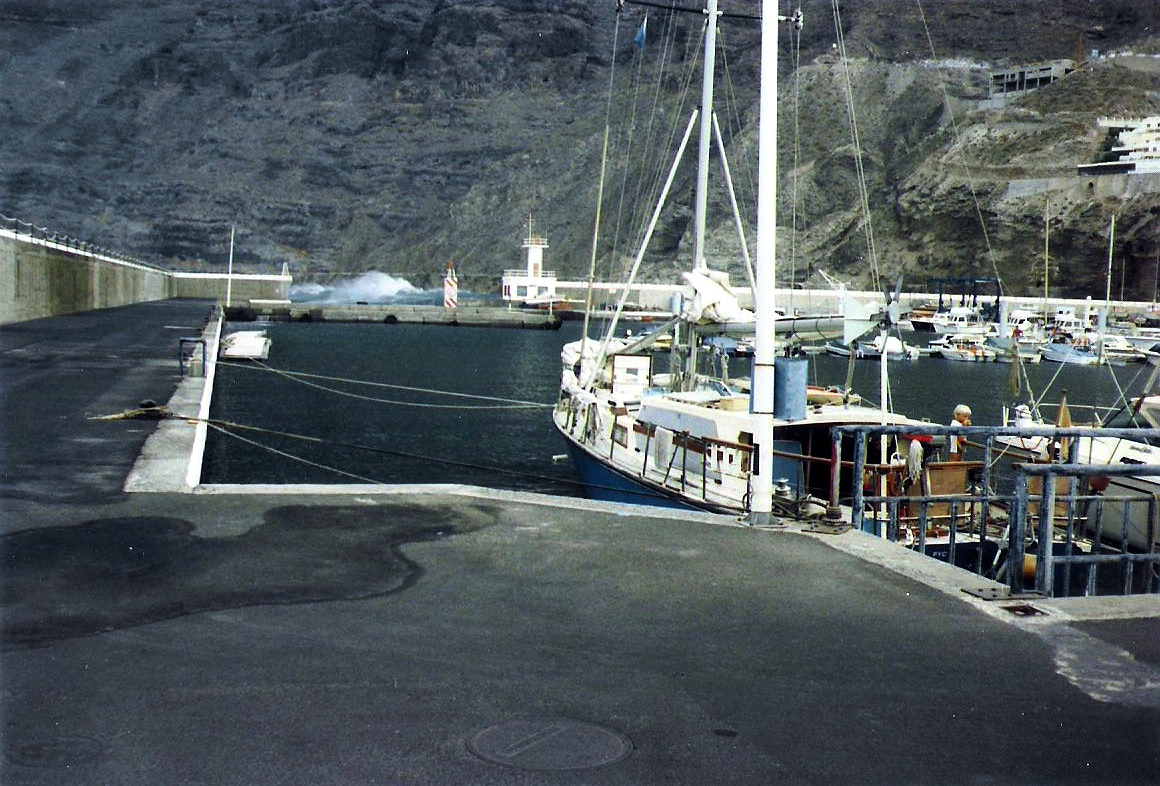
022 Safely alongside in Los Gigantes, Tenerife.
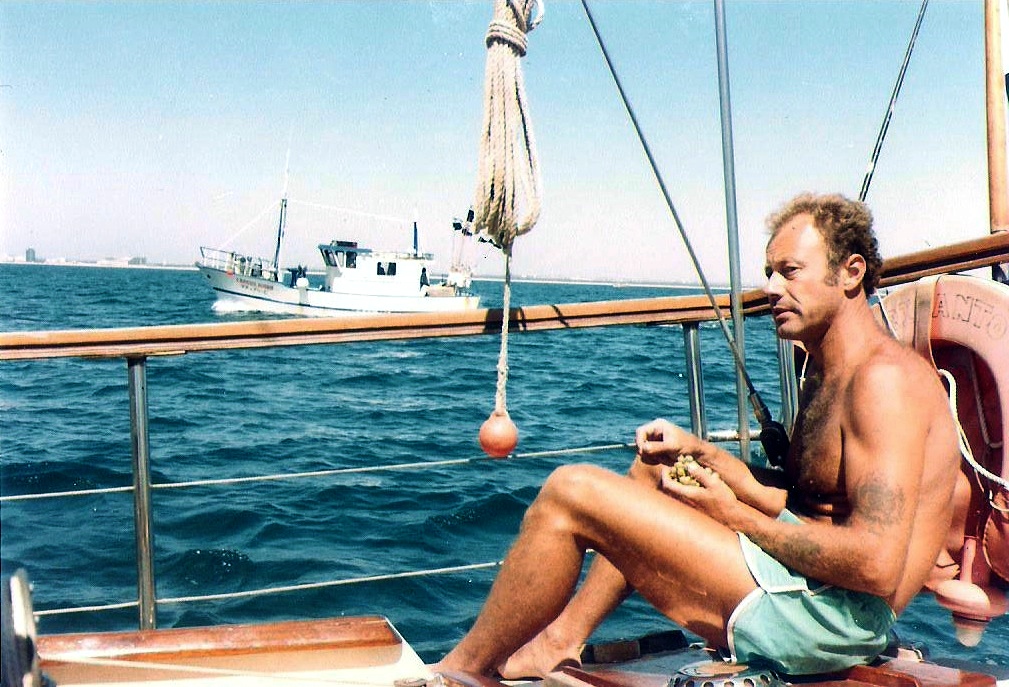
023 Skipper feasting on grapes — Portuguese coast near Lisbon.
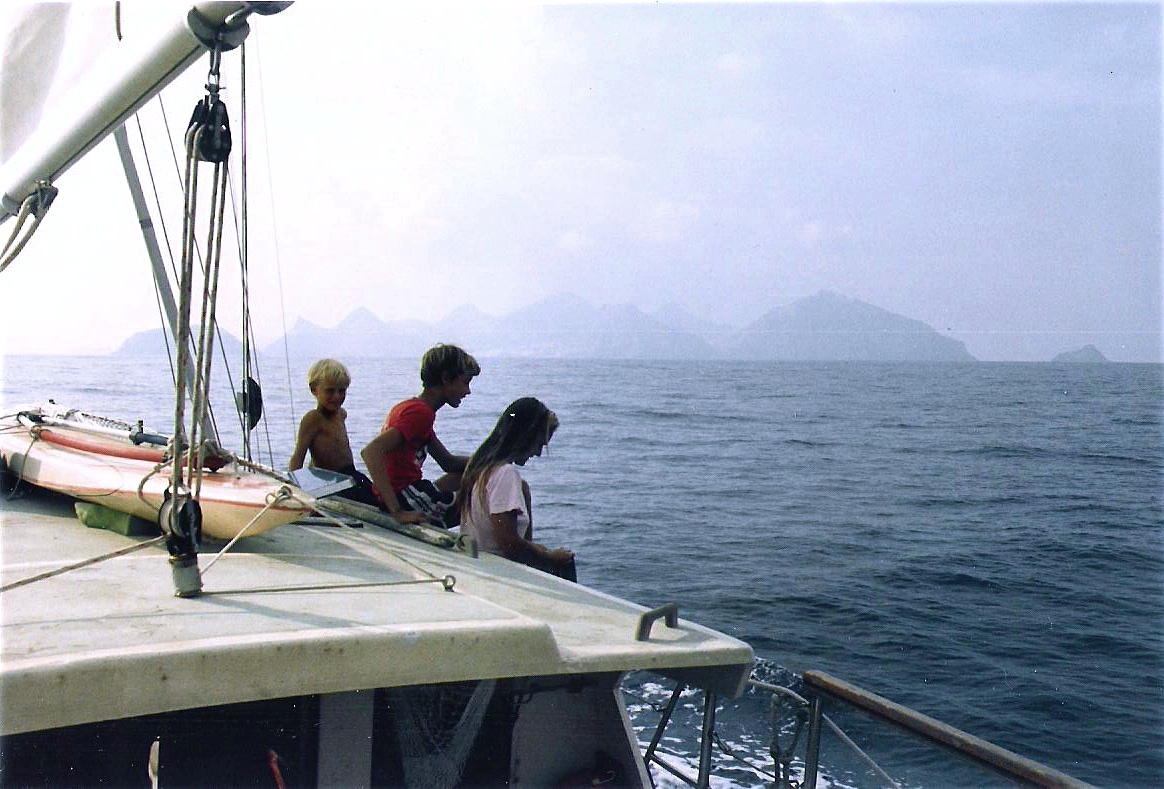
024 Approaching the eastern tip of Porto Santo.
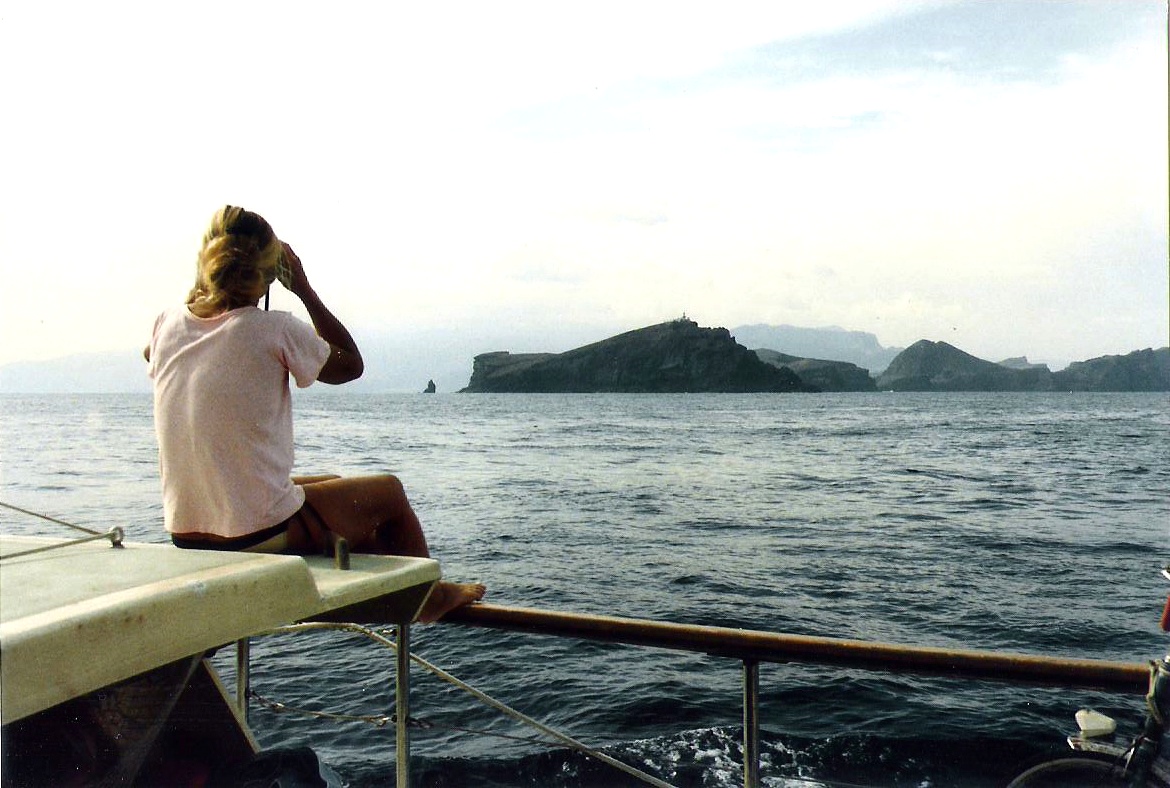
025 Cooling off east of Adra — fireworks for Our Lady of the Sea that night.
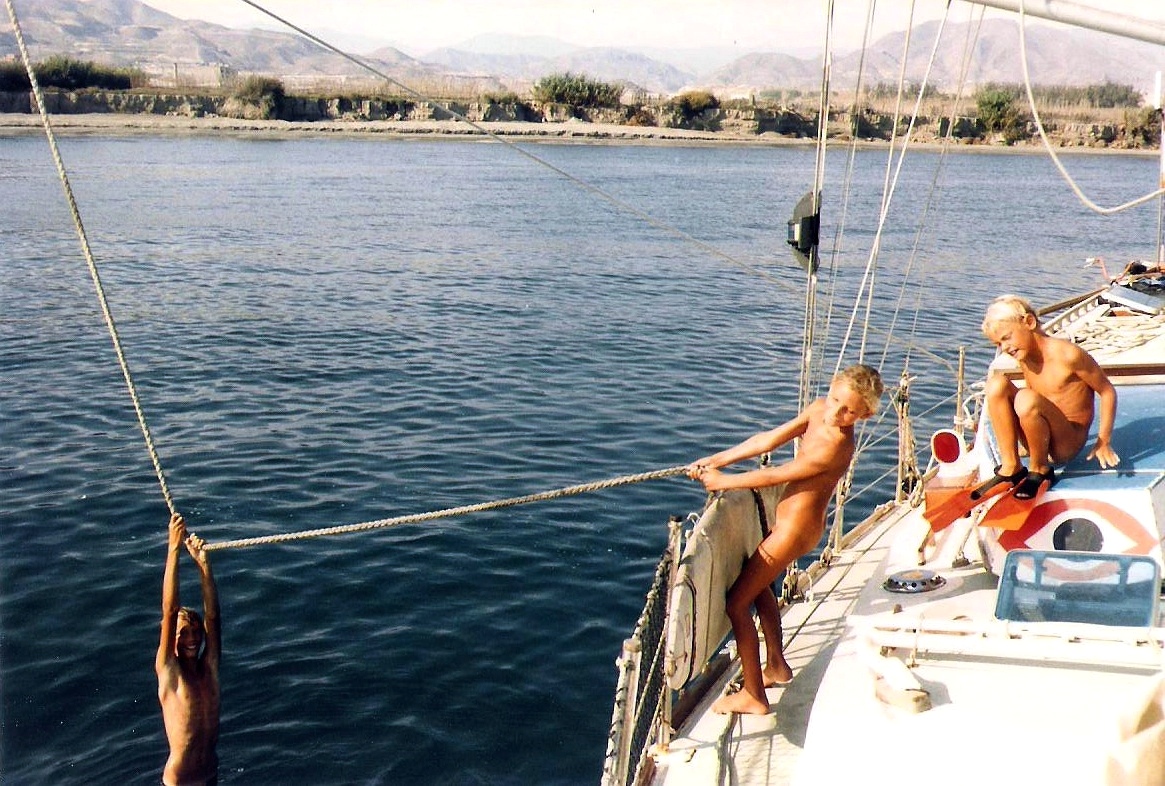
026 A small Spanish harbour where we rested for the night.
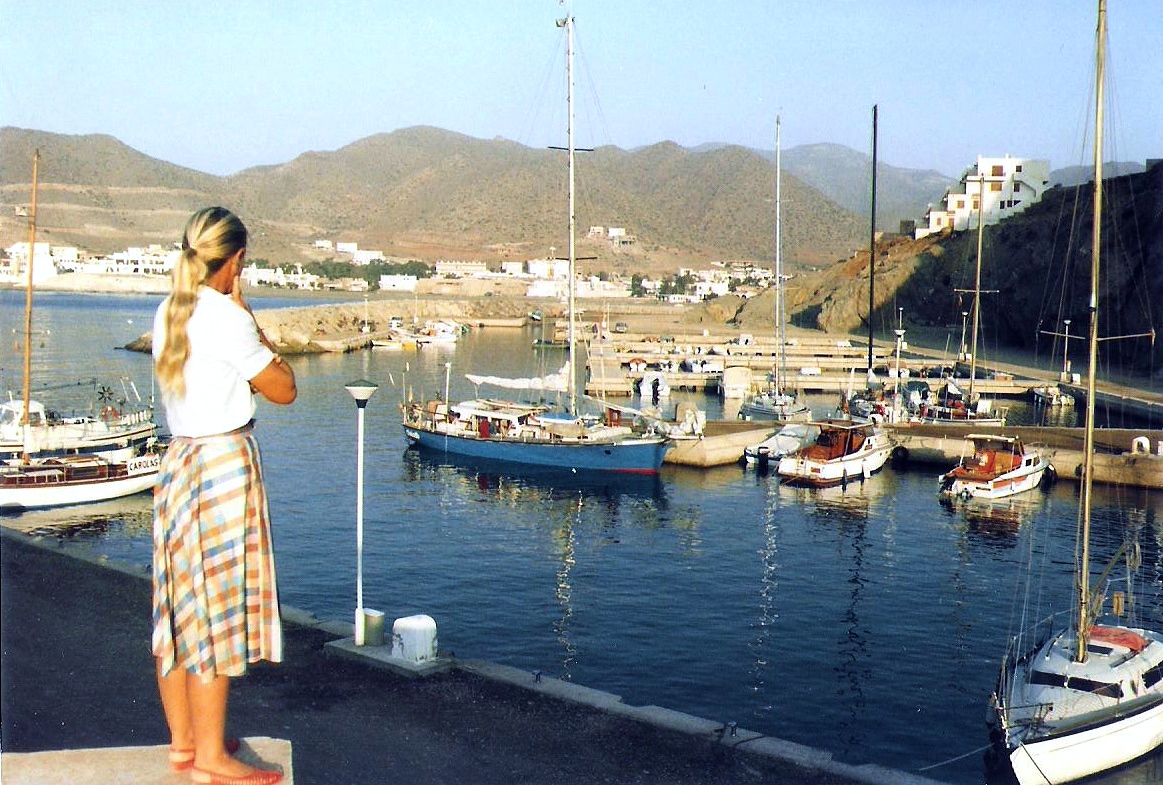
027 My mother at the helm leaving Funchal, Madeira, for the Canaries.
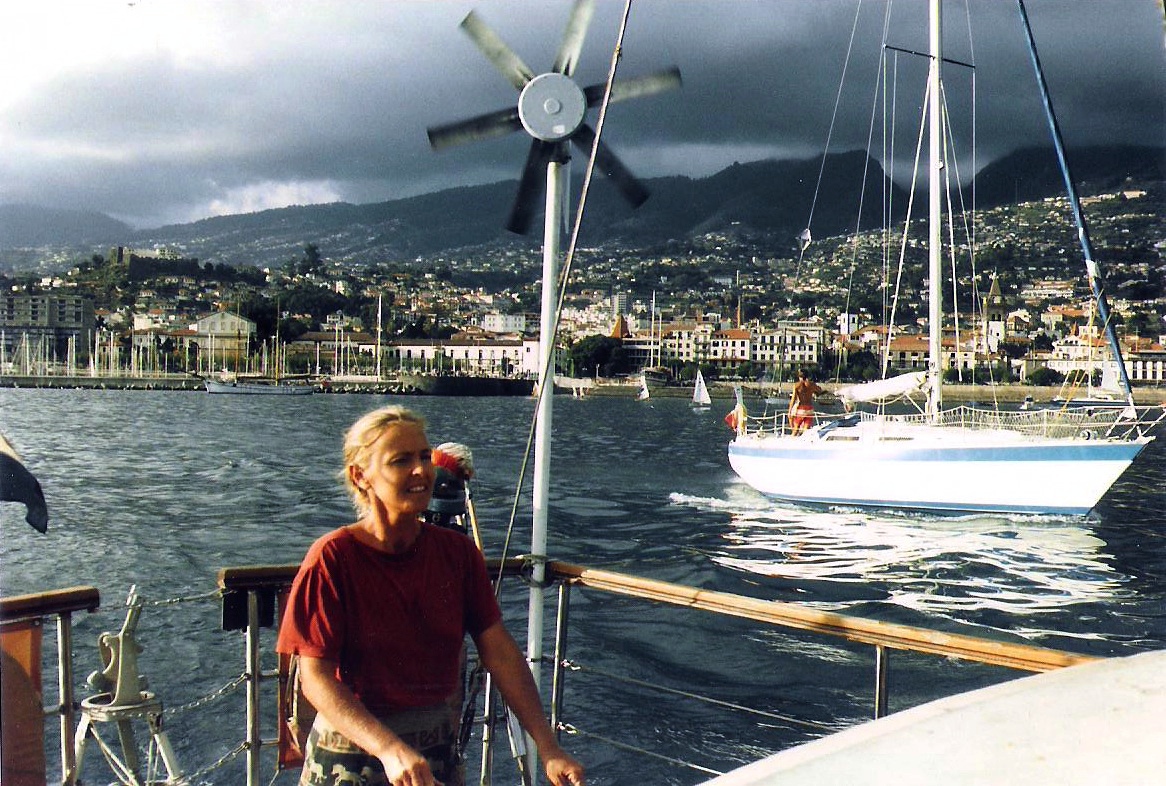
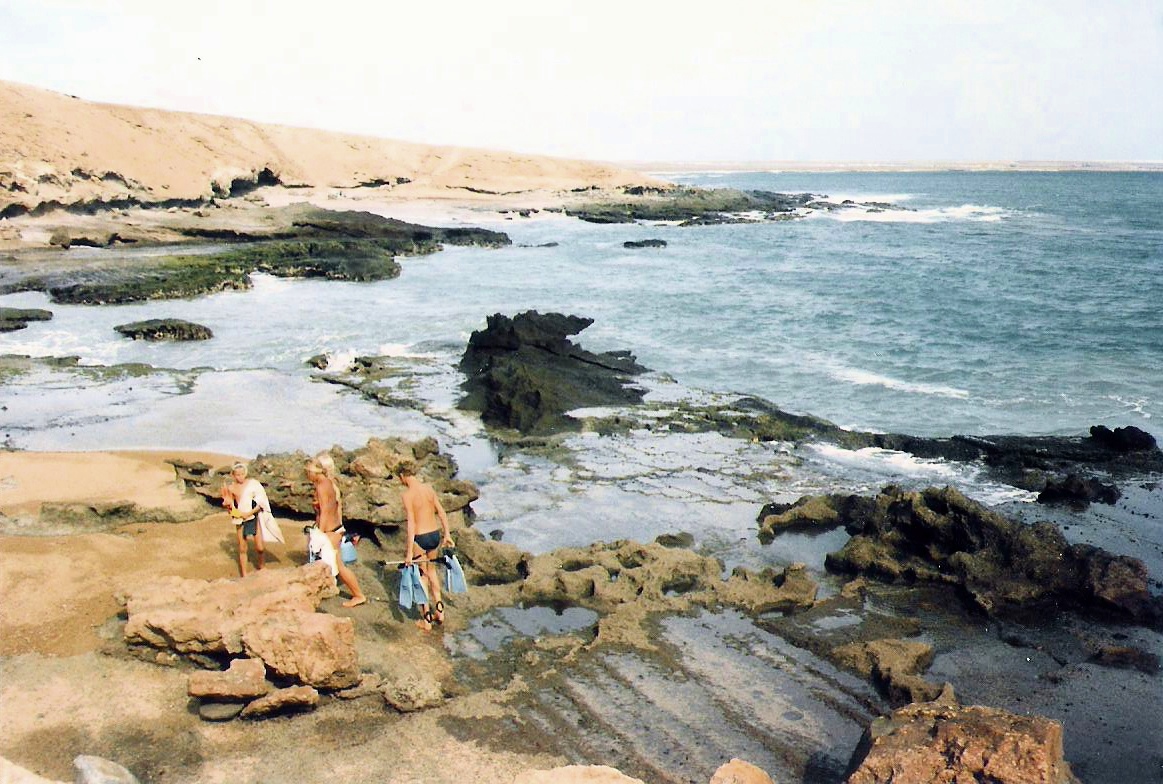
028 Walking back from snorkelling, Baia Mordera, Ilha do Sal.
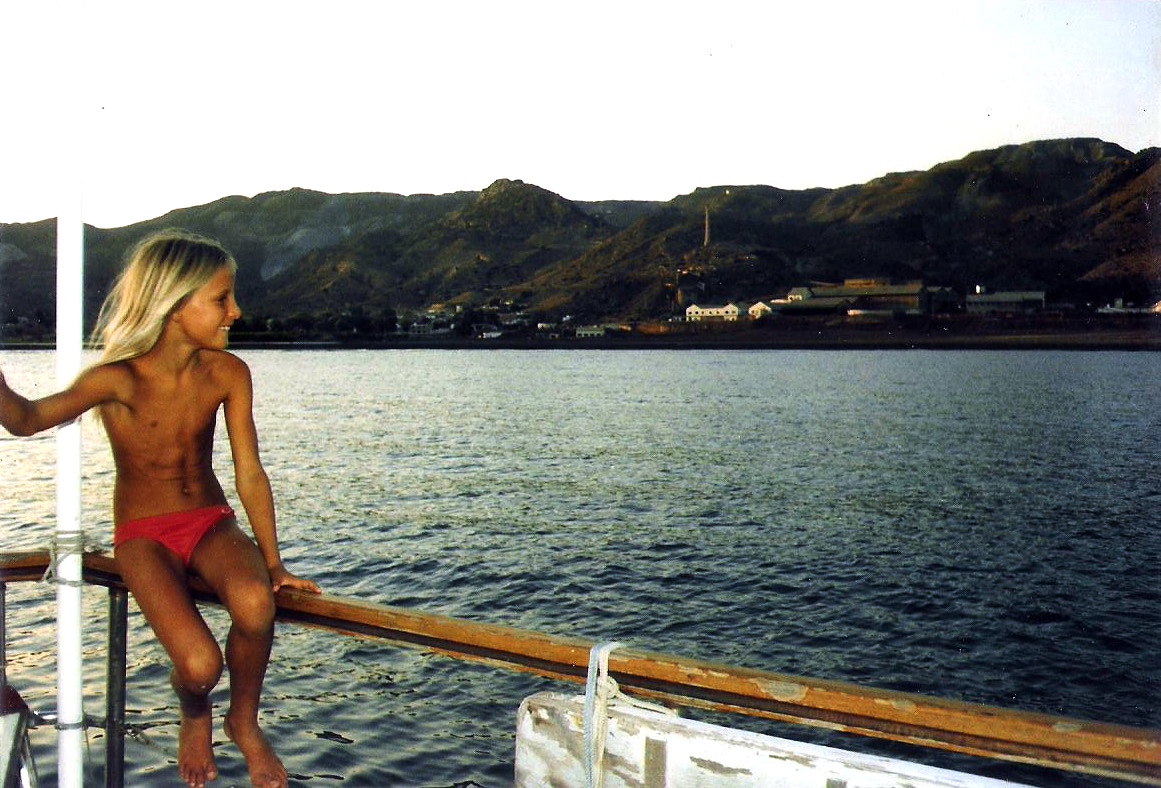
029 Candice watching southern Spain slip by in the evening.
030 Dramatic cliffs at Sal — we snorkelled for crayfish at the foot of these.
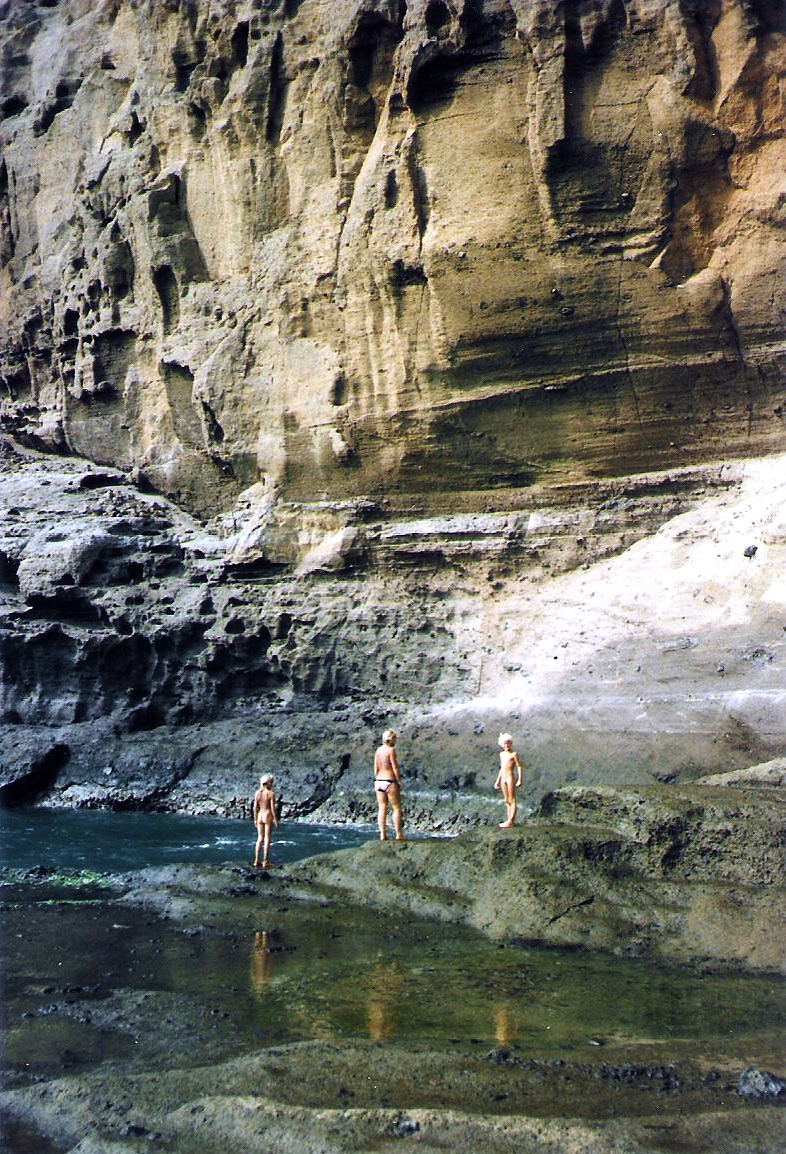
031 The cliffs at Sal.
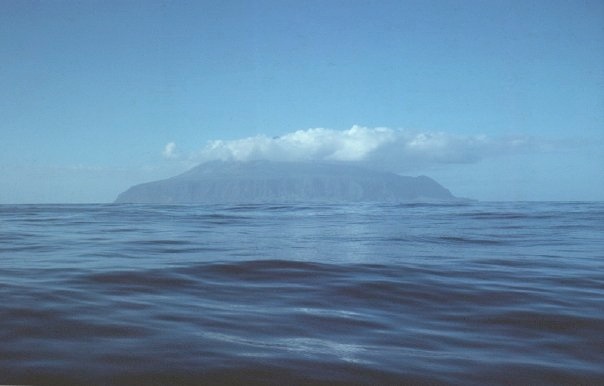
032 Cooling off in the South Atlantic on a day of light airs.
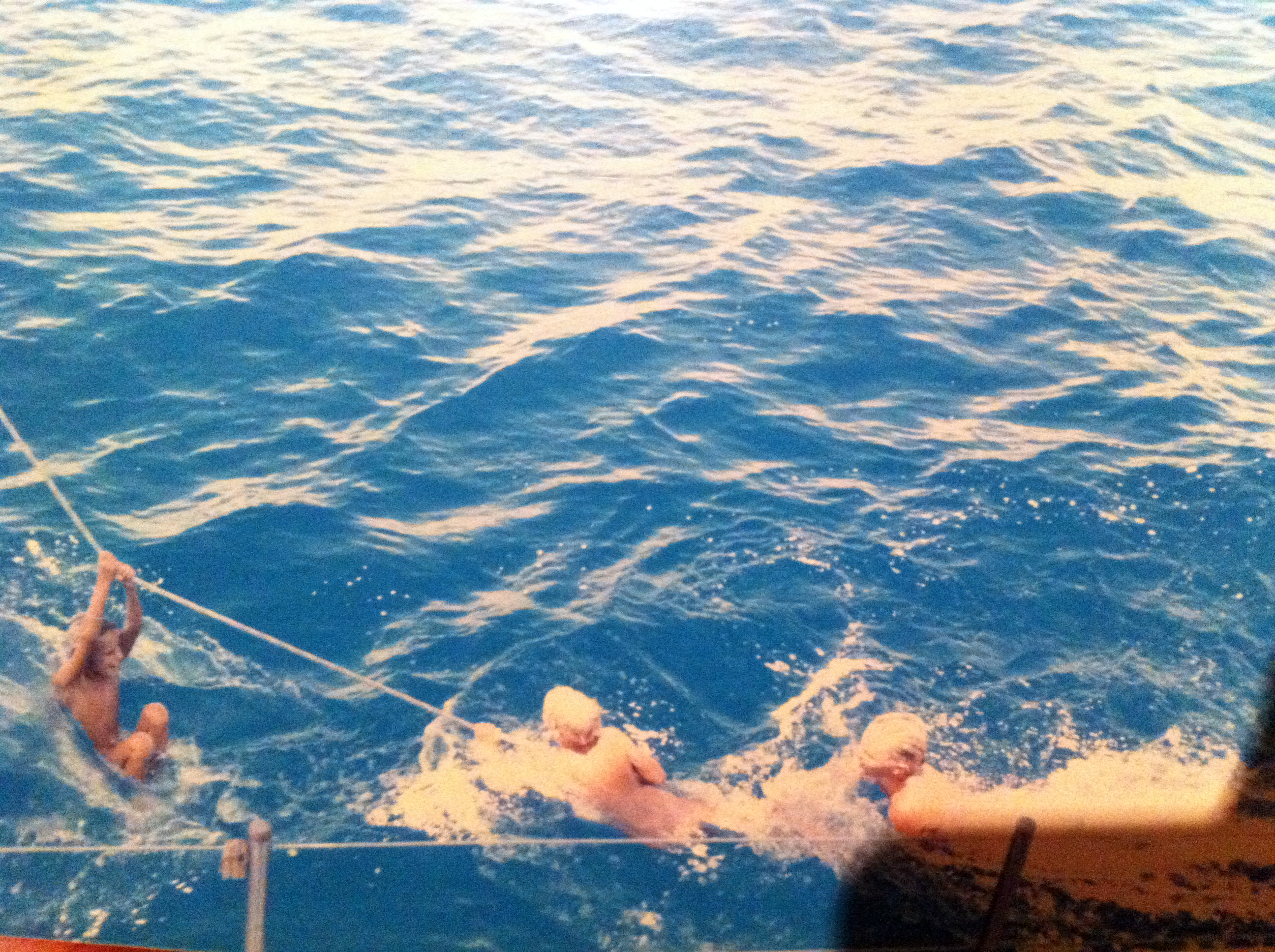
033 Swimming alongside. Two thousand metres of water beneath.
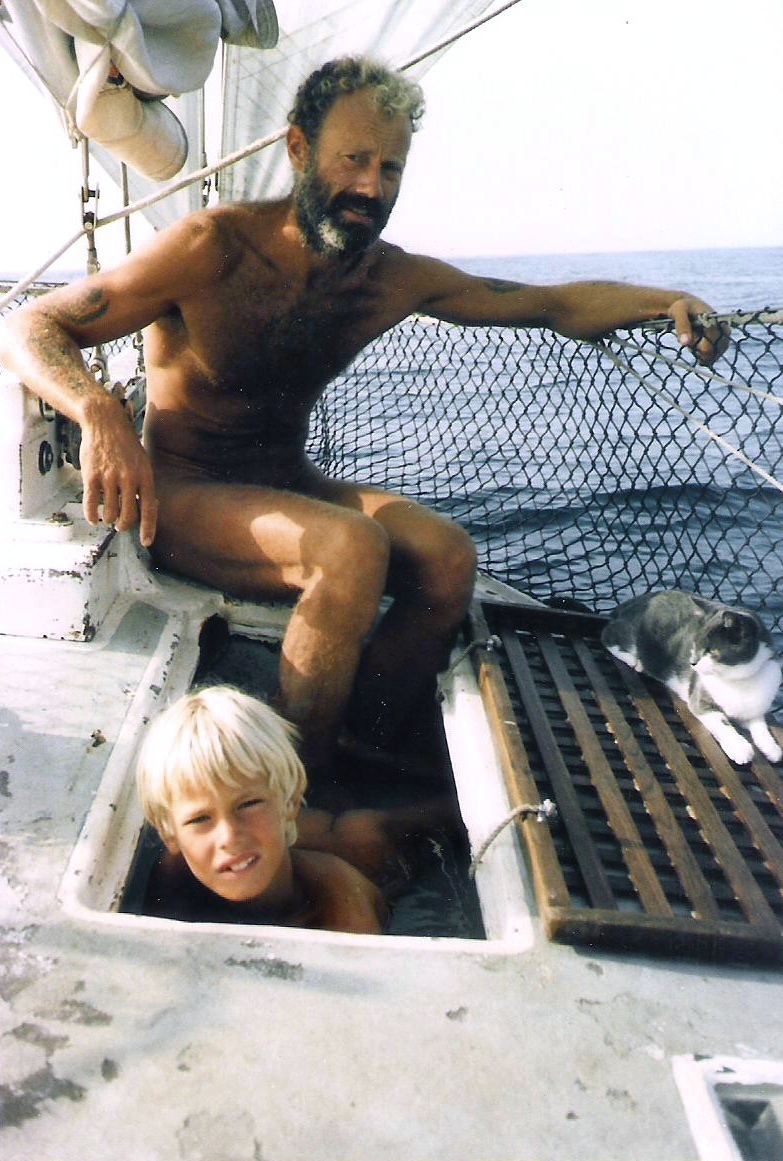
034 Skipper looking weatherbeaten, Antony cooling off, Pusskins on the lookout.
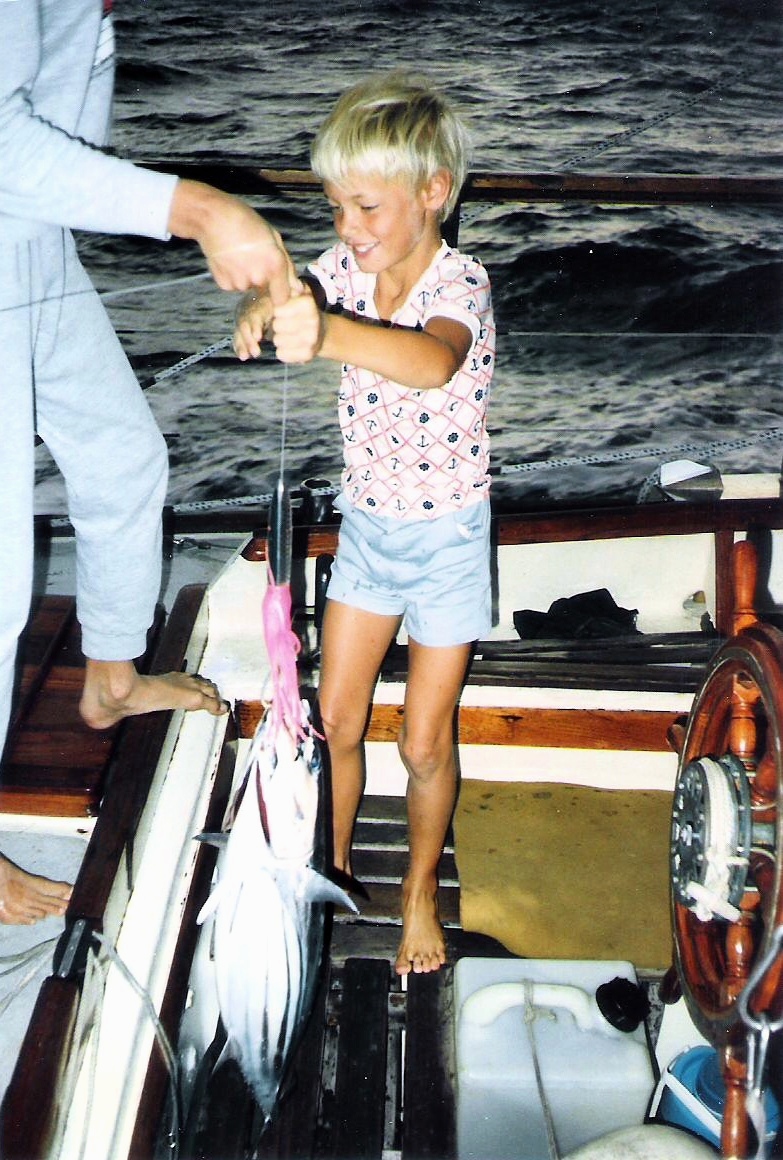
035 Antony in the cockpit with a tuna caught on the way to Tristan.
From Madeira we sailed for La Palma. A south-west gale put us in Tenerife instead. Then Los Gigantes, with the surf breaking right across the entrance, requiring one to time the gaps between waves with the kind of precision usually reserved for surgery. Then La Gomera — the only Canary without an airport. Leaving her, the trade winds picked up. Seven boisterous days under twin running headsails took us to Ilha do Sal in the Cape Verde islands.
The Cape Verdeans were the kindest people we met on the voyage. Every passing vehicle on the island stopped for us — not slowed, stopped. The SAA technicians took us round the salt mine in the extinct volcano cone and then kindly fed us lobster. It was on Sal that I stubbed my toe in the water and discovered, in due course, that it had turned into blood poisoning. Dark veins began to climb up my leg in a manner that suggested somewhere quite specific they were headed. My mother did not panic. She started me on antibiotics and sat with me until the tideline stopped advancing, the fever broke, and the colour came back. I have observed since that this is what my mother does.
From Sal we sailed across to Brazil. Twenty dolphins shepherded us into Fernando de Noronha. The Brazilian Navy tug Almirante Guilhem invited the children aboard for dinner, gave us their ration of ice cream, and fired green flares to celebrate a football win on TV. We spent Christmas in Recife, where I changed a hundred-dollar bill at the Café San Francisco and walked out with one and a half million cruzeiros in my pockets. The Brazilian government cut three zeros off the currency not long after. I have always assumed they did this specifically to spite me. On the thirtieth of December we sailed for South Africa with three thousand three hundred and seven nautical miles ahead of us.
On the seventeenth of January 1987, at 29° 53′ S, 24° 12′ W — 1,200 nautical miles from South America and seven hundred and forty from the nearest landfall — a line squall came out of the southeast at half past one in the morning. It happened, as these things tend to, almost as soon as my father had closed his eyes. The genoa pinned aback. The deck went over. The mast — sixty-one feet of it, the central spine of our entire enterprise — came down across the port side. The wind died as suddenly as it had come, leaving an eerie silence and the mast thumping the hull. My mother, who had not been thrown out of her bunk in six years of living aboard, was thrown out of her bunk.
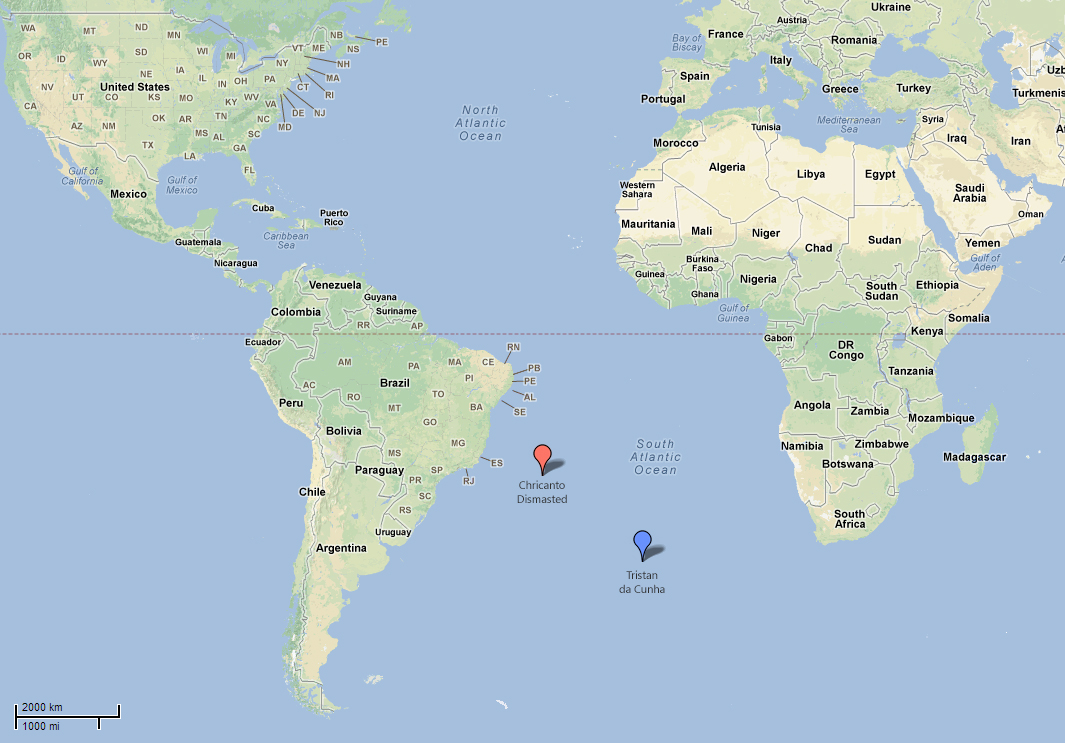
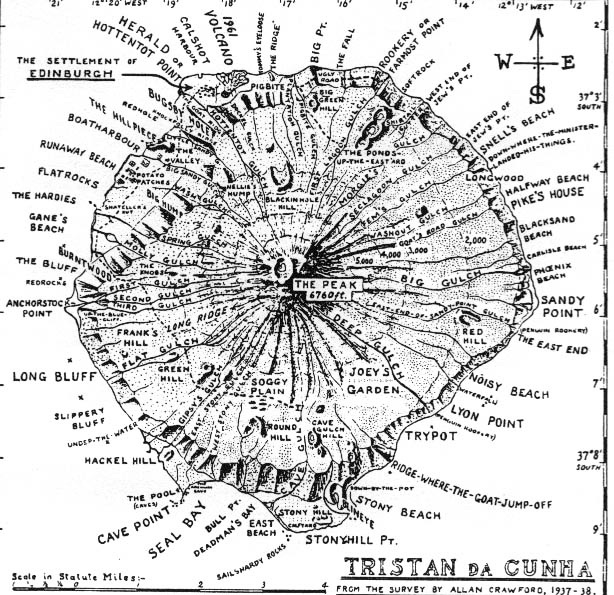
036 An exact view of where we were dismasted, and where our only hope for survival lay.
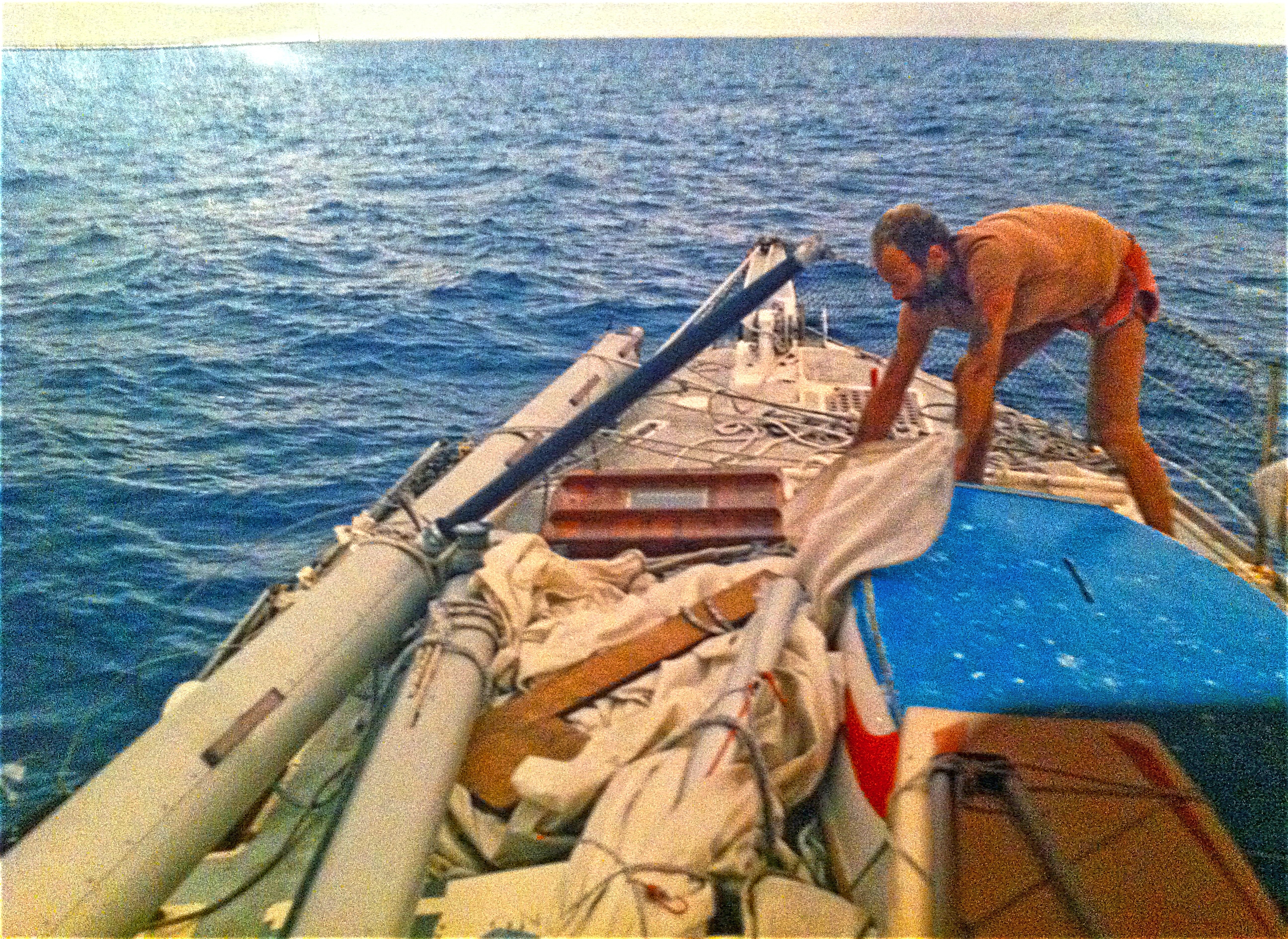
037 The morning after. Clearing the deck.
My father drew a circle of two hundred miles — the radius of our remaining fuel — centred on Tristan da Cunha, which lay seven hundred and forty miles south. The chart he used was the one he had purchased on a whim in Gibraltar three months earlier. A white-tipped shark turned up at dawn and stayed with us for two weeks, swimming a few metres behind the boat with the leisurely manner of a creature that knew it had time. He kept us out of the water.
We spent the next three weeks under jury rig — a modified trysail for a main, two cut-down jibs poled out forward, a storm jib hanked upside-down on a backstay. The whole arrangement looked like the laundry of a particularly indecisive household, but it sailed. The first day we made sixty-seven miles. After that the runs collapsed to five or ten a day. Seventeen days in, a fishing boat passed within sight. We fired eight parachute flares, four hand-helds, and a smoke float. My mother called on channel sixteen. The vessel — an Asian fishing boat, white-hulled, "apparently devoid of life" my father wrote in the log — steamed on by and disappeared.
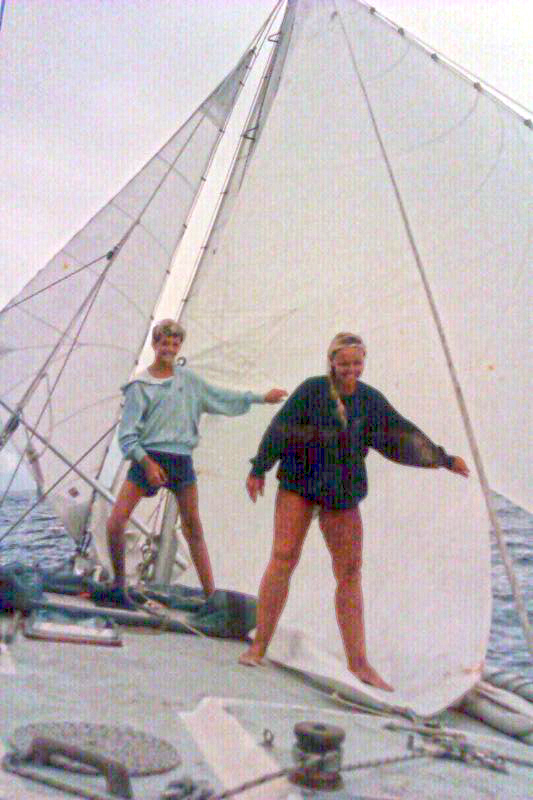
038 My mother and me with the jury rig hoisted. Sixty-seven miles the first day.
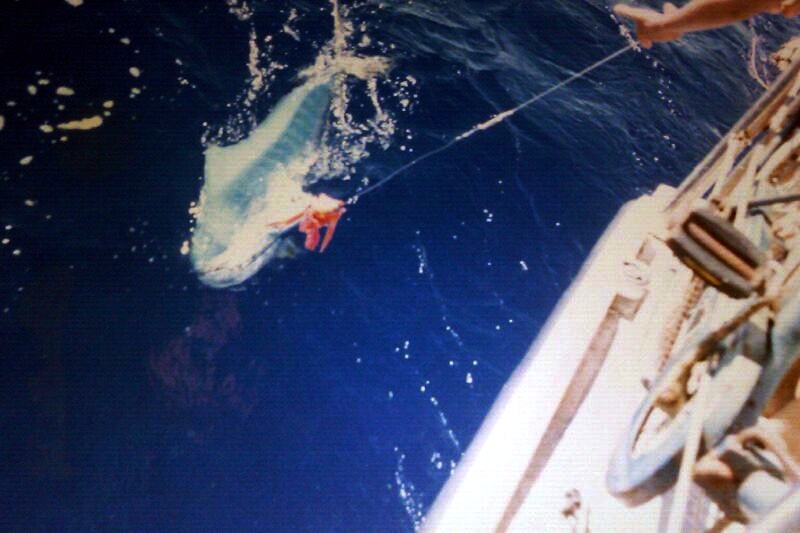
039 A dorado for supper.
On the morning of the seventh of February I went looking for the hake we had been saving to eat the moment we sighted land. He was, you must understand, a quite small hake — about the size of a child's hand — who had followed us patiently for weeks. He was gone. The rest of the family had cooked and eaten him for breakfast while I slept. I have not entirely forgiven them.
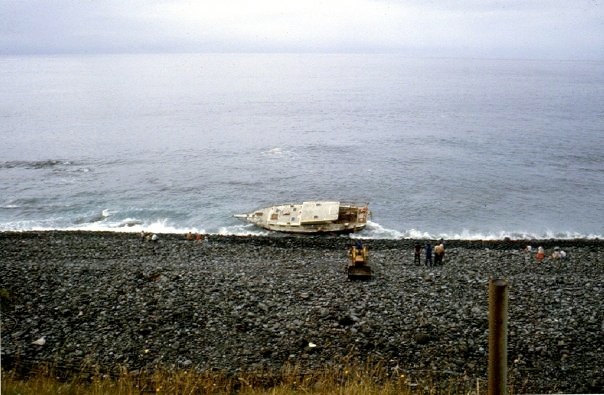
That afternoon at fifteen-fifteen the mist cleared and the symmetrical cone of Tristan da Cunha rose dead ahead, fifty-five miles off. Our navigation had been spot on. After much soul-searching my father concluded that we would not attempt another fifteen hundred miles to Cape Town in a leaking, jury-rigged yacht. The Sunday after we arrived, we stripped Chricanto of everything of value. The island government bought most of it. Then they beached her on the rocks. By the time we left three months later, she had begun to break up.
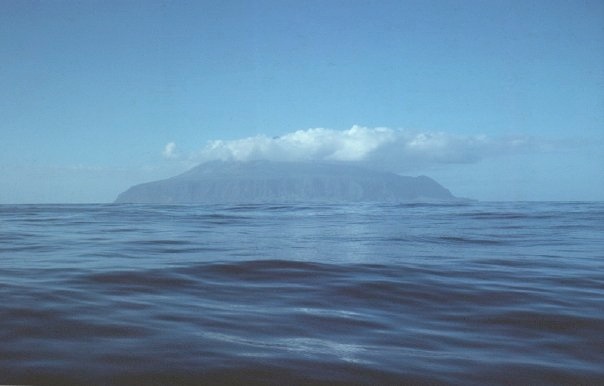
040 Tristan da Cunha bearing 075, distance 8 nautical miles.
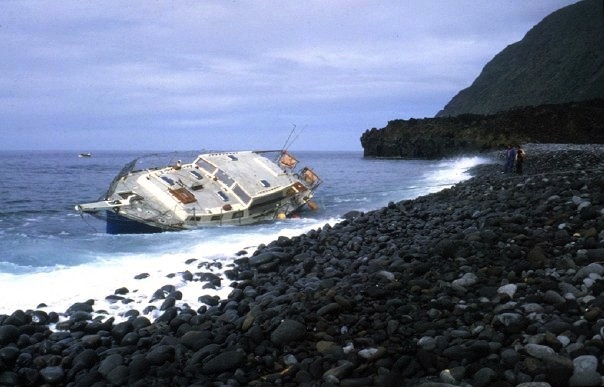
041 The ignominious end. Hauled up on the rocks east of Boatharbour.
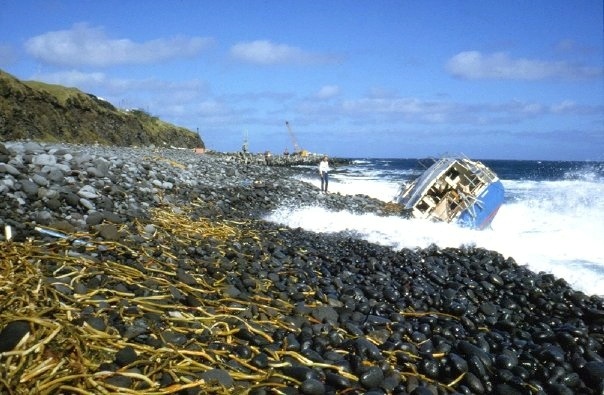
042 The final demise of Chricanto.
There are three hundred and fifty people on Tristan da Cunha. They share seven surnames between them. Until the war they were paid in potatoes. We lived in a wooden bungalow above Boatharbour in the company of Calum the doctor, David the Padré, and Jim the senior schoolteacher. Pusskins was the only cat on the island. The children had never seen one. The cattle, who had no frame of reference, found her sufficiently alarming that a cow actually ran away.
I attended St Mary's school. I made friends with the island kids — Ian, Dan, the rest of them. We climbed Pigbite to the Ponds. We took the launch eighteen miles south-west to Nightingale for a day. On the twenty-second of April we helped tow the longboats out for the annual fatting trip. The trip was supposed to take five days. The weather kept them on Nightingale for a month. They came back fine. Our windsurfer sail, donated to the cause, became one of their jibs.
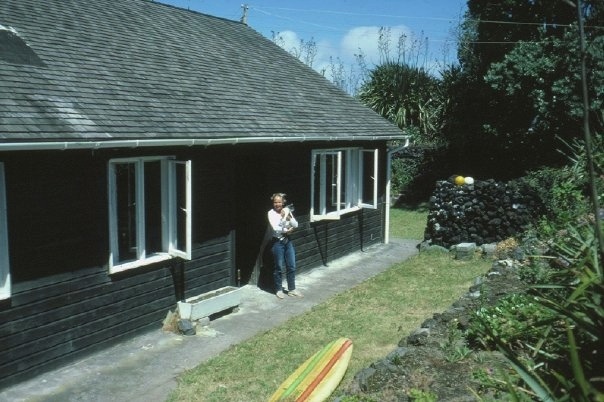
043 The bungalow allocated to us. Used by scientific expeditions from time to time.
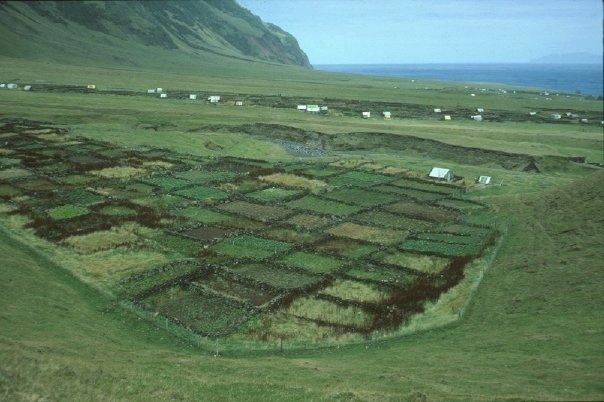
044 The all-important potato patches, with Inaccessible Island in the distance.
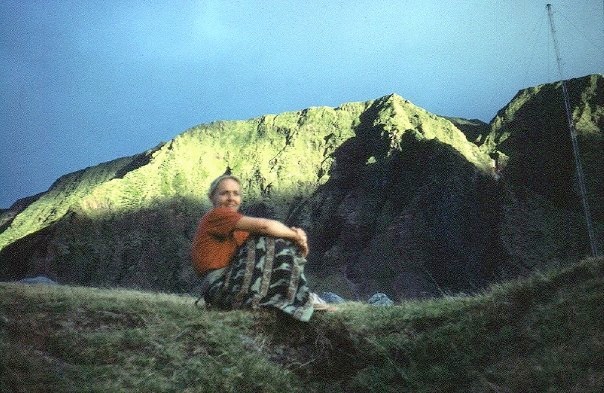
045 My mother with Pigbite behind — on the way up to the Ponds.
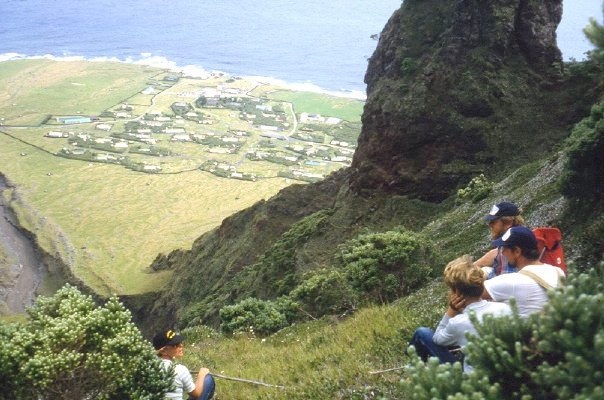
046 The settlement from upper Hottentot Gulch, on the escarpment.
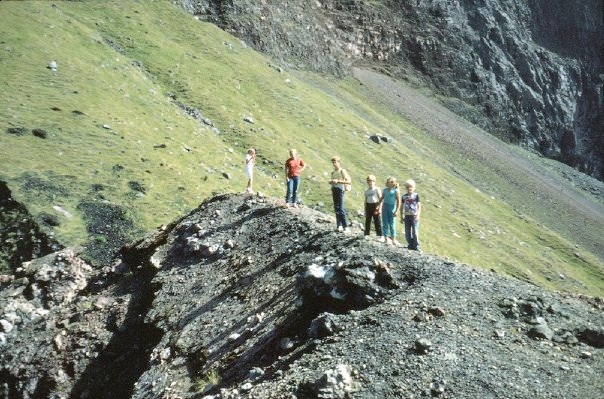
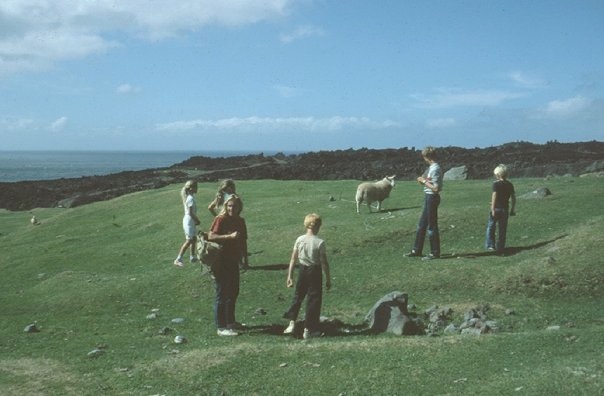
047 Family and island youngsters on the summit of the new volcano.
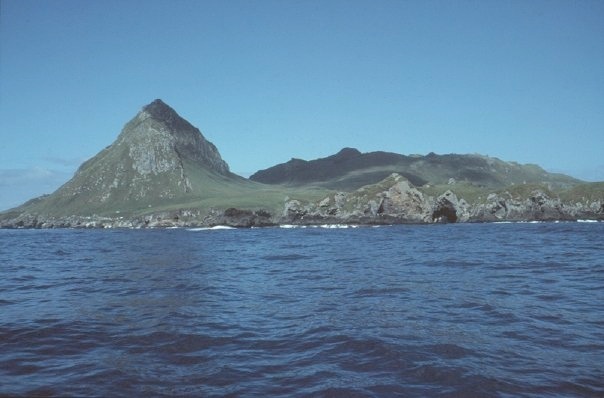
048 Approaching Nightingale Island from the north-west.
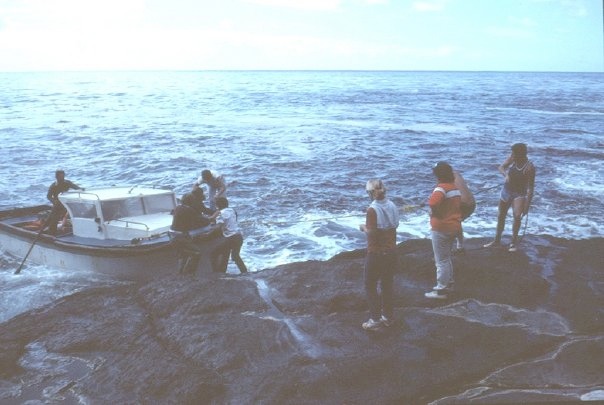
049 Landing on Nightingale — no beaches anywhere in the group.
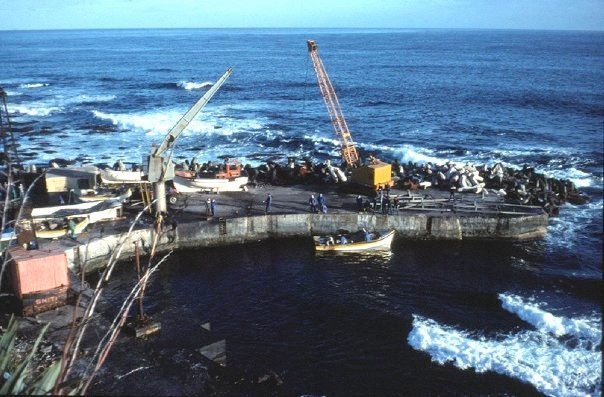
050 Boatharbour from the access road up to the crayfish plant.
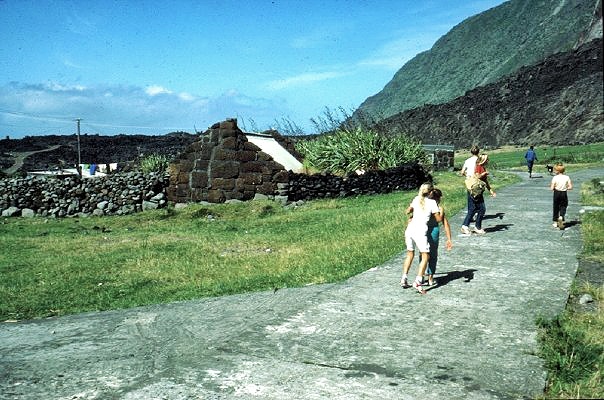
051 One of the village 'roads' with the 1961 volcano behind.
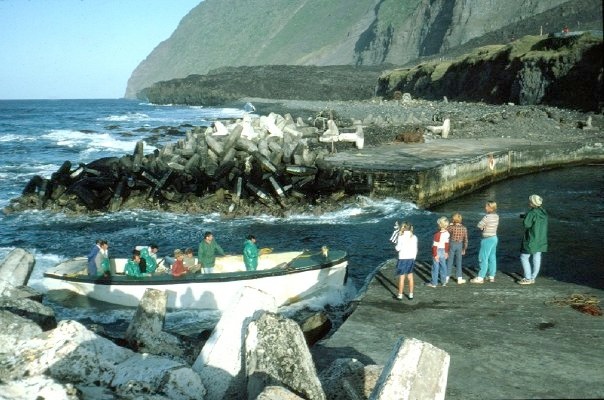
052 A fishing boat returning to Boatharbour after a day's crayfishing.
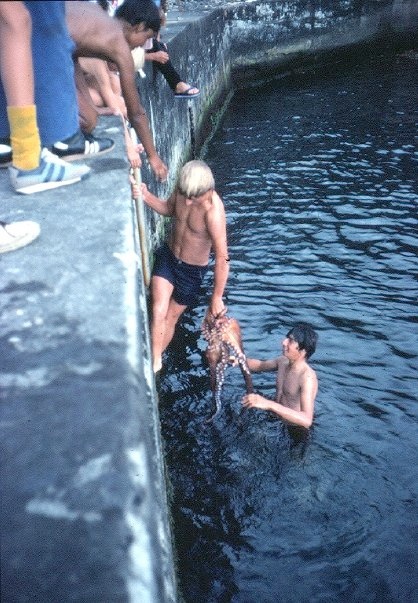
053 Ian and Dan with an octopus caught in Boatharbour.
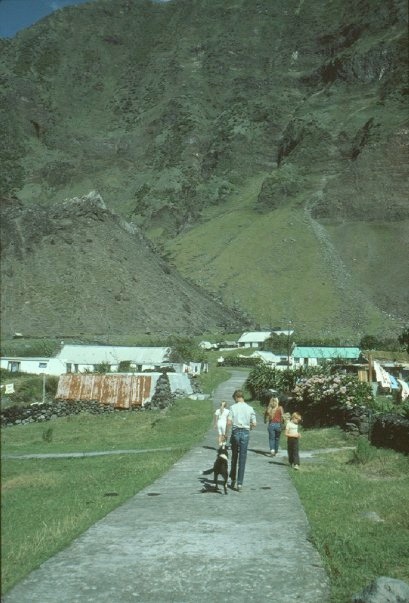
054 The family walking through the village with Tristan above us.
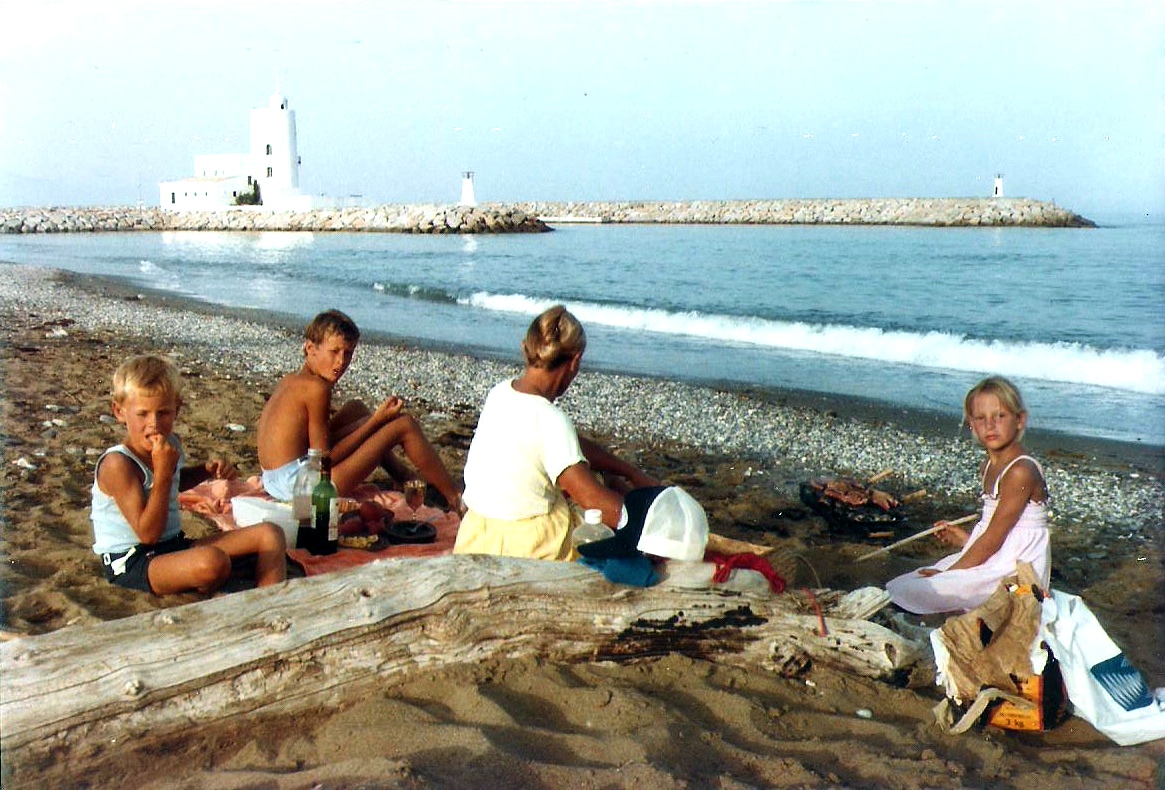
055 Tristan.
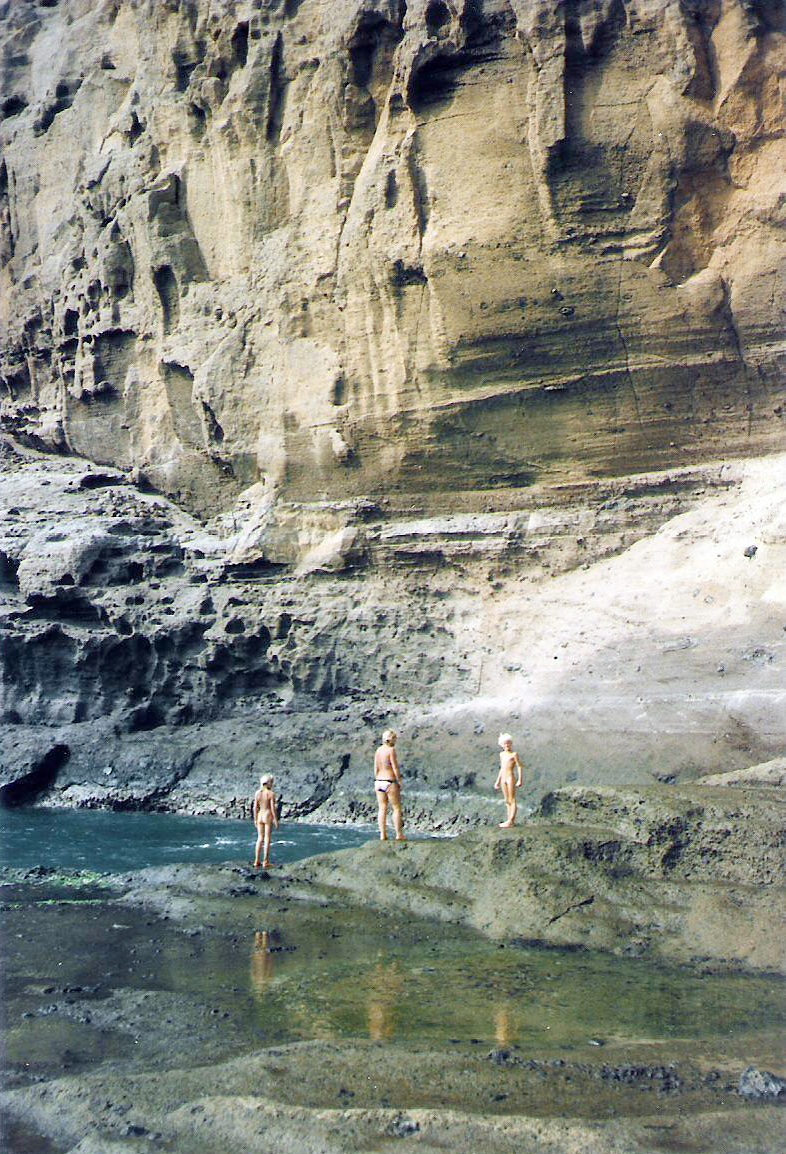
056 Tristan.
057 Tristan.
059 Tristan.
062 Heading home.
063 Heading home.
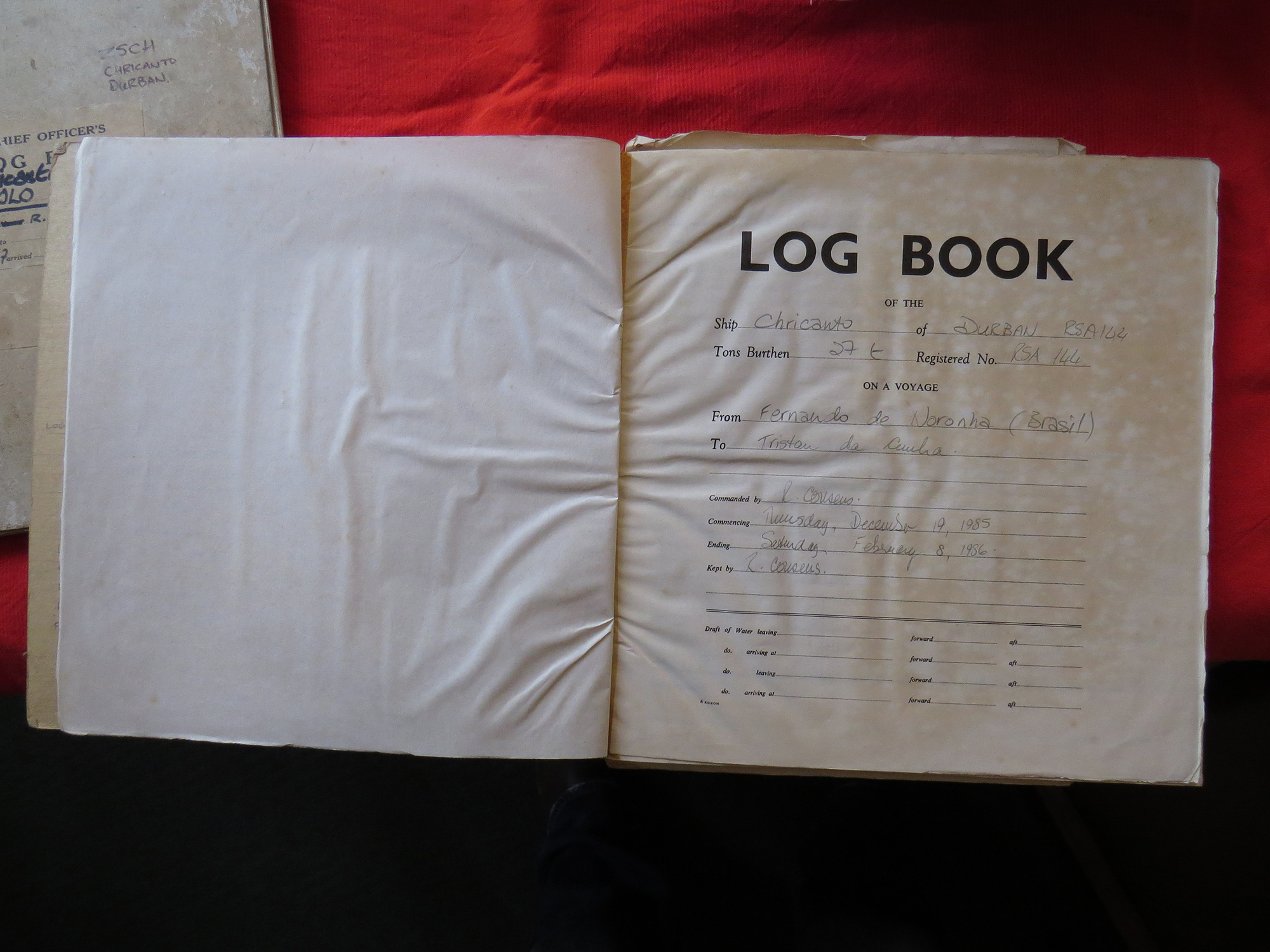
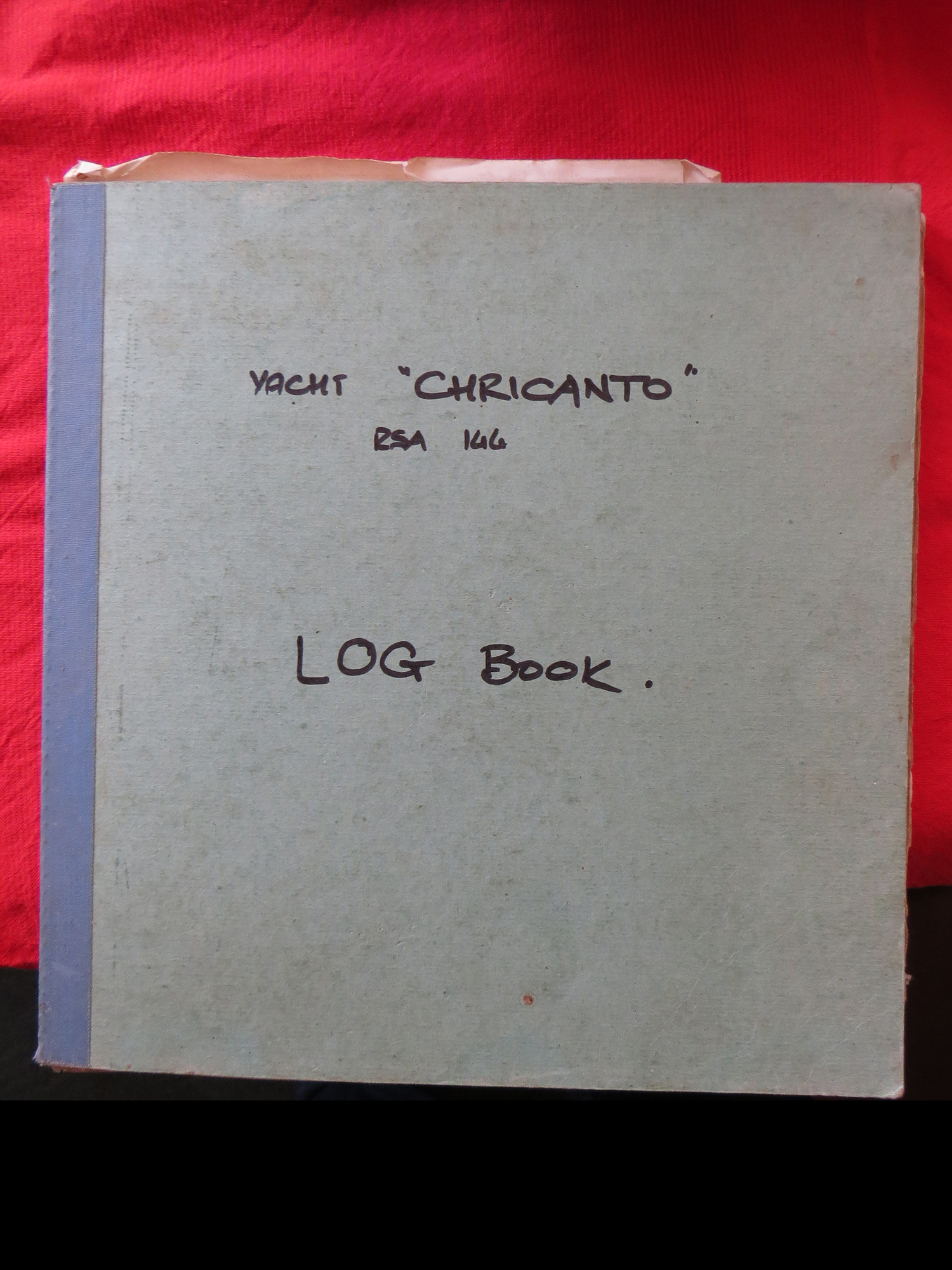
064 The ship's log book. Voyage from Fernando de Noronha to Tristan da Cunha. Kept by R. Cousens.
Three months later we left Tristan aboard the M.V. Tristania, one of the crayfish processing vessels that service the island from Cape Town. We stepped off in Cape Town in May 1987, weary and a little sad and richer in the way that has nothing to do with money. Chricanto is on the rocks at Tristan still, somewhere, broken up between the parts the islanders wanted and the parts they didn't.
That a mast can come down in the middle of an ocean and you can put a smaller one up. That a thirteen-year-old can stand a watch. That my father was unwavering when the end could so easily have been a tragic one. That my mother has an inner strength second to none. That the most dangerous part of the night is not the squall — it is the moment afterward, when nothing is making any sound and you cannot yet see what is broken.
My father wrote it all down in a book years later — better than I just have — and I helped him put it together. The full version is his to tell. This is the part that stayed with me.